Škarić sredina, Kolan (Pag) Beach, Croatia
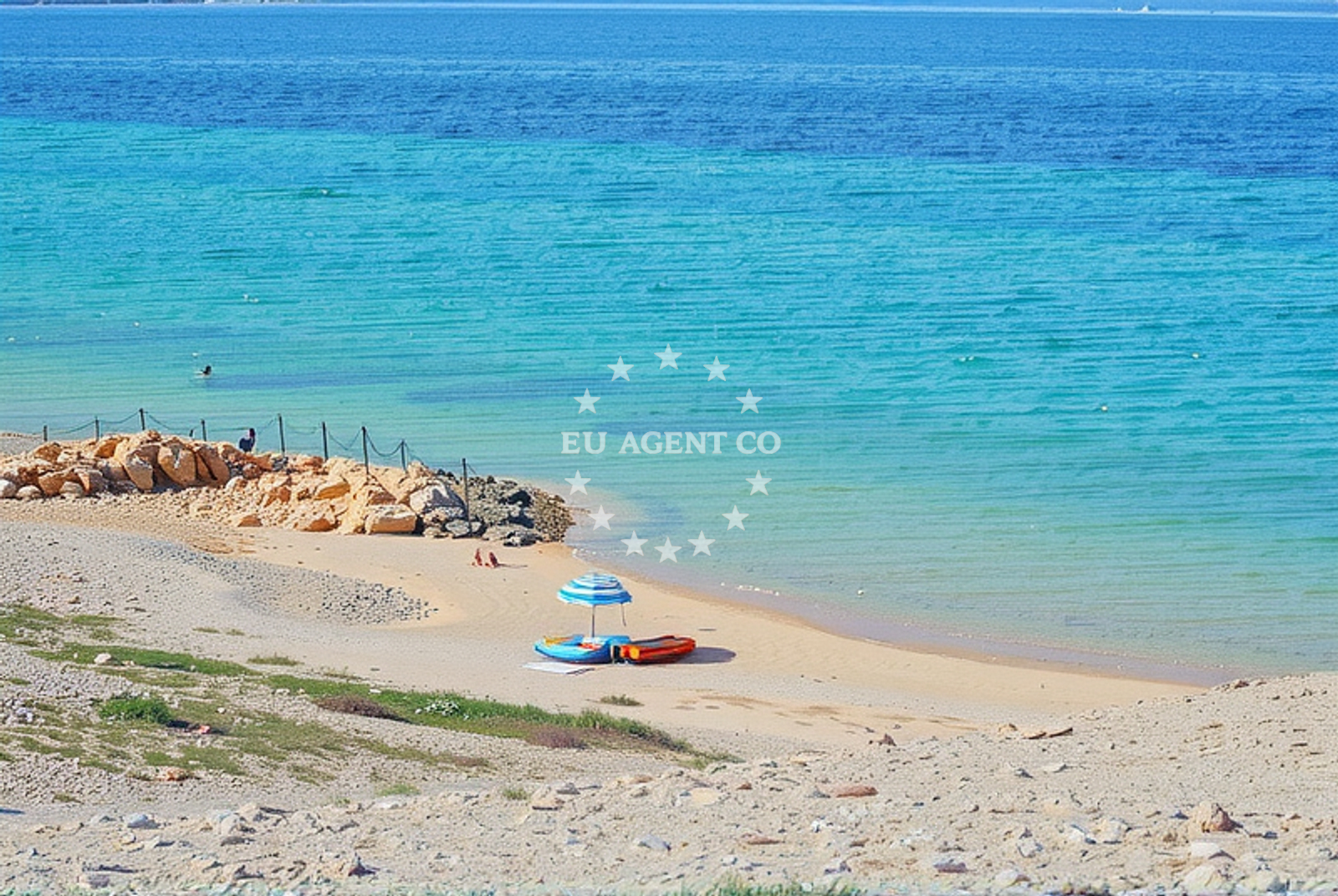
Škarić sredina, Kolan (Pag) Beach lies on the island of Pag, a windswept Adriatic outpost known for its rugged coastline and limestone cliffs. This 20-meter-wide shoreline combines sand and gravel, offering a stark contrast to the island’s more popular pebble beaches. Its location on the northern coast of Pag places it within reach of the broader Dalmatian coast, where sailing routes connect to historic towns like Zadar and the Kornati archipelago.
About this beach
Škarić sredina, Kolan (Pag)
Beach: Škarić sredina
Location: Kolan (Pag)
Characteristics and facilities
Sand, gravel
20 m
Beach character
The beach’s composition of sand and gravel creates a textured walking surface, ideal for those seeking a less crowded alternative to Pag’s more developed shores. The 20-meter width accommodates small groups but lacks the expansive space of larger beaches. The absence of artificial amenities means the shoreline remains unaltered, preserving its natural state. The beach’s position on Pag’s northern coast exposes it to open-sea conditions, making it a spot where the Adriatic’s energy is palpable.
Swimming and shore
Swimming here is feasible but depends on wave activity, which can be significant due to the beach’s exposure. The gravel section may deter barefoot swimmers, though the sand patches offer softer entry points. The shoreline’s gradient is gentle, allowing easy access to the water. No lifeguard services or safety infrastructure are present, aligning with Pag’s generally self-reliant coastal character.
Facilities and activities
No permanent facilities exist along the beach, reflecting Pag’s minimalist approach to coastal development. The lack of umbrellas, sunbeds, or changing rooms means visitors must bring their own equipment. The beach’s natural state makes it suitable for casual sunbathing, but its limited width and uneven surface may not appeal to those seeking luxury amenities.
Access and location
Reaching Škarić sredina requires navigating Pag’s rural roads, which wind through olive groves and vineyards. The nearest major settlement is Kolan, a small village on Pag’s northern coast. The beach is not served by public transport, necessitating a private vehicle or a ferry transfer to Pag followed by a local drive. Its remoteness ensures minimal crowds but requires visitors to plan transportation in advance.
What to expect
Expect a raw, unspoiled shoreline on Pag’s northern coast, where sand and gravel meet the Adriatic. The beach’s 20-meter width and lack of amenities cater to visitors seeking solitude over convenience. Its exposure to open-sea conditions means waves can be unpredictable, and the gravel sections may require sturdy footwear. The surrounding landscape of limestone cliffs and agricultural land offers a stark, authentic coastal experience distinct from Pag’s more tourist-oriented beaches.
Practical tips
Bring sturdy shoes for the gravel sections and consider a vehicle for access. Check tide conditions before visiting, as the beach’s width may change with water levels. The absence of facilities means packing essentials like sunscreen, water, and seating is necessary. Early arrival is advisable to secure sunbathing spots during peak season.
Exploring the coast by yacht
Pag’s coastline, including Škarić sredina, lies within a major sailing corridor connecting Zadar, the Kornati Islands, and the northern Dalmatian coast. Euro-Agent offers yacht charters in this region, allowing visitors to explore Pag’s lesser-known shores and anchor near this beach. The open-sea exposure here suits motor yachts seeking a direct route to the mainland, while sailboats may find the conditions challenging depending on wind patterns.
Pag’s Coastal Identity
The island of Pag, with its karst topography and sparse population, defines a unique coastal identity. Unlike the more developed shores of Hvar or Korčula, Pag’s beaches often retain their natural state. Škarić sredina exemplifies this, offering a glimpse into the island’s rugged, unpolished coastline. Local traditions here are rooted in fishing and agriculture, with little influence from mass tourism.
Anchorages in the surrounding area
Anchorages in Mandre, Novalja, and Stara Novalja on Pag offer nearby mooring options.
- Anchorage — mandre — pag — 1.6 NM from beach
- Anchorage — novalja — pag — 1.7 NM from beach
- Anchorage — mandre — pag — 1.9 NM from beach
- Anchorage — mandre — pag — 2.3 NM from beach
- Straško — novalja — pag — 3.1 NM from beach
- Anchorage — cesarica — 3.6 NM from beach
- Anchorage — stara novalja — pag — 3.9 NM from beach
- Anchorage — cesarica — 4.0 NM from beach
Distances are straight-line geographic distances, not sailing routes.
Mooring buoys in the surrounding area
Mooring buoys at Zubovici, Novalja, and Simuni provide nearby anchoring points.
- Jetty — zubovici — pag — 1.4 NM from beach
- Jetty — zubovici — pag — 1.6 NM from beach
- Buoy field — novalja — pag — 3.6 NM from beach
- Jetty — simuni — pag — 3.9 NM from beach
- Drljanda — stara novalja — pag — 5.6 NM from beach
Distances are straight-line geographic distances, not sailing routes.
Marine fuel stations
- Ina — rab — 16.0 NM from beach
- Ina — mali losinj — 20.6 NM from beach
- Adria Oil — mali losinj — 21.0 NM from beach
- Tifon — nerezine — losinj — 25.0 NM from beach
Distances are straight-line geographic distances, not sailing routes.
Harbours in the surrounding area
- Žigljen — zigljen — pag — 3.4 NM from beach
- Novalja — pag — 3.4 NM from beach
- Prizna — 4.7 NM from beach
- Stara Novalja — pag — 5.2 NM from beach
- Karlobag — 5.4 NM from beach
- Pag — 6.6 NM from beach
Distances are straight-line geographic distances, not sailing routes.
Marinas in the surrounding area
- ACI Marina Šimuni — simuni — pag — 3.3 NM from beach
- ACI Marina Rab — 16.0 NM from beach
- ACI Marina Supetarska Draga — rab — 19.1 NM from beach
- Y/C Marina Mali Lošinj — mali losinj — 20.7 NM from beach
- Marina Lošinj — mali losinj — 20.9 NM from beach
Distances are straight-line geographic distances, not sailing routes.
Restaurants near the beach
Restaurants in Novalja offer dining options near the beach.
- Margarita — novalja — pag — 2.8 NM from beach
- Restaurant — novalja — pag — 2.9 NM from beach
- Konoba Grill Matulo — novalja — pag — 2.9 NM from beach
- Restaurant — novalja — pag — 3.0 NM from beach
- Konoba Reful — novalja — pag — 3.0 NM from beach
- Restaurant — novalja — pag — 3.0 NM from beach
- La Tortilla — novalja — pag — 3.0 NM from beach
Distances are straight-line geographic distances, not sailing routes.
Navigation guides for the surrounding area
Navigation guides for Caska, Novalja, and Uvala Prizna assist in local sailing routes.
- Caska — 1.6 NM from beach
- Novalja — 3.1 NM from beach
- Uvala Prizna — 4.8 NM from beach
- Uvala Bliznica — 8.8 NM from beach
- Uvala Jakisnica — 9.9 NM from beach
Distances are straight-line geographic distances, not sailing routes.
Yachts from nearby departure bases
Sailing yachts
- First 45 (Egeria) — Šimuni Kolan ACI Marina — 3.2 NM from departure base to beach
- Elan 40 Impression (Laali) — Mali Lošinj — 20.7 NM from departure base to beach
- Sun Odyssey 349 (Nara) — Mali Lošinj — 20.7 NM from departure base to beach
Motor yachts
- Absolute 50 Fly (Acrobat) — Rab ACI Marina — 16.0 NM from departure base to beach
Motor boats
- Balt 818 Titanium (Valentina 2) — Novalja — 3.3 NM from departure base to beach
- Balt 818 Titanium (Valentina) — Novalja — 3.3 NM from departure base to beach
- BWA Sport 22GT (BWA ) — Pag City Port — 6.7 NM from departure base to beach
- Merry Fisher 895 — Povljana Marina — 12.6 NM from departure base to beach
- Invictus 200FX (1255ML) — Mali Lošinj — 20.7 NM from departure base to beach
- Galeon Galia 630 (Kali) — Mali Lošinj — 20.7 NM from departure base to beach
Distances are straight-line geographic distances, not sailing routes.