Poglava istok, Rivanj (Rivanj) Beach, Croatia
Poglava istok, Rivanj (Rivanj) Beach lies along the rugged coastline of Rivanj, a small settlement in the Split-Dalmatia County of Croatia. This stretch of shore is part of the broader Adriatic coastline, where the sea meets the limestone cliffs and olive groves that define the region. While the beach itself is not extensively documented in terms of specific amenities, its location offers a glimpse into the traditional coastal lifestyle of the area, where fishing, sailing, and seasonal tourism shape daily life.
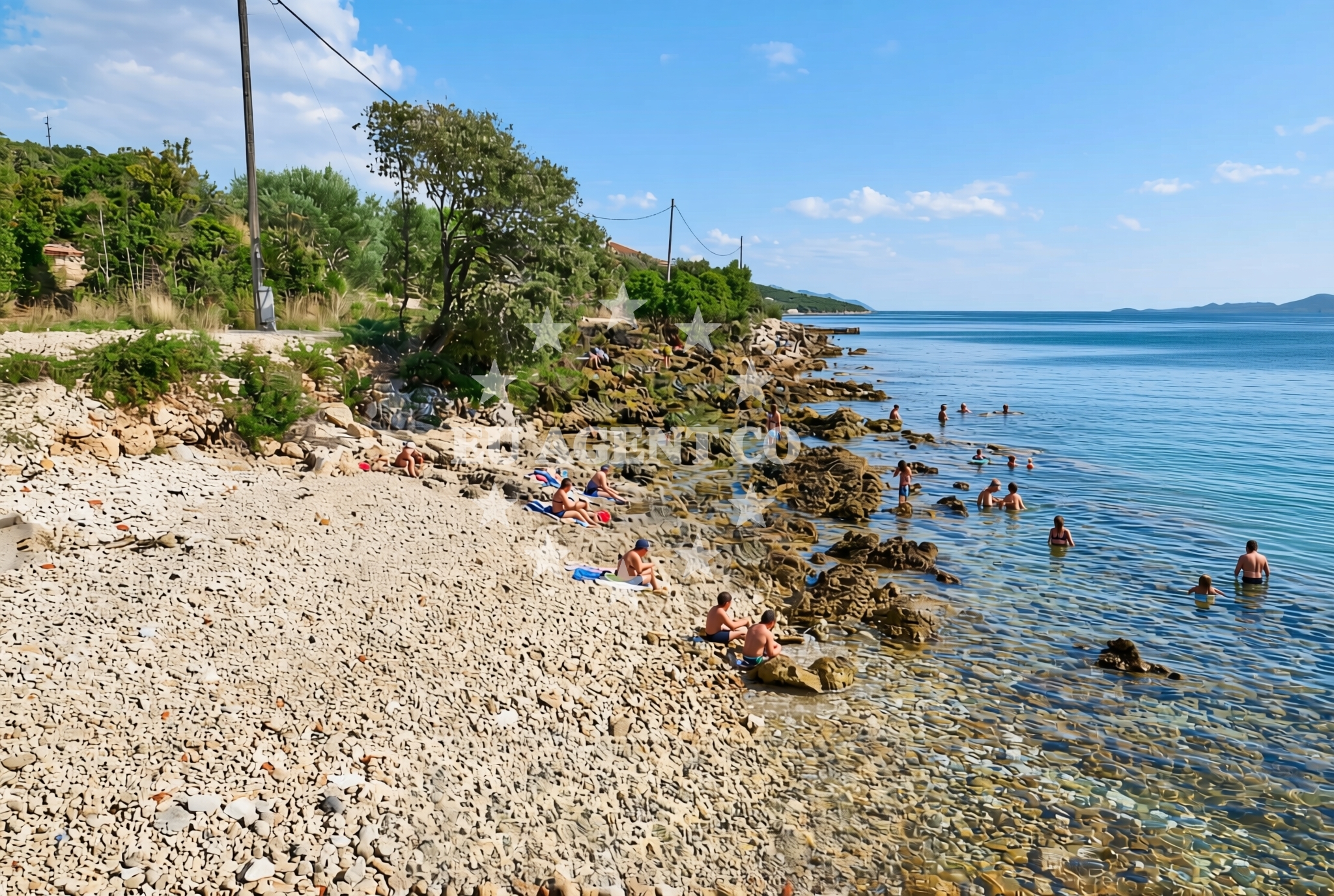
About this beach
Poglava istok, Rivanj (Rivanj)
Beach: Poglava istok
Location: Rivanj (Rivanj)
Beach character
The beach is situated on the eastern side of Poglava, a promontory that juts into the Adriatic Sea. The shoreline here is characterized by a mix of pebbles and small patches of sand, typical of the Dalmatian coast. The water is clear, and the seabed slopes gently, making it suitable for swimming for those comfortable with slightly rocky entries. The surrounding landscape is marked by low cliffs and scattered pine trees, offering natural vantage points for observing the sea and the occasional passing boat.
Swimming and shore
Swimming conditions at Poglava istok are generally favorable during the summer months, with water temperatures reaching comfortable levels by June. The shore is relatively quiet, with few artificial structures, allowing visitors to enjoy a more natural setting. The nearby waters are known for their clarity, which makes snorkeling a possibility for those willing to explore the shallows. However, the beach lacks formal lifeguard services or marked swimming zones, so visitors should exercise caution, particularly near the rocky sections.
Facilities and activities
There are no formal facilities directly on the beach, such as restrooms, showers, or umbrellas. However, the nearby village of Rivanj offers basic amenities, including small shops, taverns, and seasonal accommodations. Visitors may find it useful to bring their own supplies, as the beach is not served by regular public transportation. The area is popular with local fishermen, and it is not uncommon to see boats moored along the shore or casting nets in the early morning.
Access and location
Reaching Poglava istok requires a short walk from the main road that runs through Rivanj. The beach is accessible via a narrow path that winds through the rocky terrain, offering scenic views of the coastline. The nearest major town is Split, located approximately 45 kilometers to the southeast, which provides access to a range of services, including ferry terminals, marinas, and cultural attractions. The beach's remote location makes it an ideal spot for those seeking solitude, though it may require more effort to reach compared to other, more developed beaches in the region.
What to expect
Visitors to Poglava istok should expect a tranquil, undeveloped beach experience. The area is best suited for those who appreciate natural settings over commercialized amenities. The lack of infrastructure means that the beach is not ideal for large groups or families with young children, but it offers a peaceful alternative for solo travelers or couples looking to escape the crowds. The surrounding area is rich in historical and cultural sites, including ancient Roman ruins and medieval fortifications, which can be explored on day trips from Rivanj.
Practical tips
Given the beach's remote nature, it is advisable to bring sufficient water and sun protection. Parking is limited near the shore, so visitors may need to park in Rivanj and walk. The best time to visit is during the late spring or early autumn, when the weather is mild and the crowds are smaller. Local guides can provide insights into the area's history and fishing traditions, enhancing the experience for those interested in the region's heritage.
Exploring the coast by yacht
For yacht charter guests, the proximity of Poglava istok to the Split-Dalmatia coastline offers opportunities to explore a region rich in maritime history and natural beauty. The nearby marinas in Split and Bol provide convenient bases for sailing excursions, with routes extending to the islands of Brač, Hvar, and Šolta. The beach itself is not a formal anchorage, but its location allows for brief stops during longer sailing trips, offering a chance to enjoy a quiet moment on the water. Charter yachts may find the surrounding waters particularly appealing for their calm conditions and scenic vistas.
Historical Context of Rivanj
Rivanj has a long history tied to the Adriatic trade routes and the Venetian Republic. The village's name is believed to derive from the Croatian word 'rivnja,' meaning 'a narrow passage,' a reference to the natural straits that once facilitated maritime traffic. Today, remnants of this history can be seen in the village's architecture and in the local traditions that emphasize seafaring and fishing. Visitors interested in history may want to explore the nearby ruins of the Roman settlement of Aenaria, which dates back to the 2nd century BCE.
Anchorages in the surrounding area
Anchorages in the surrounding area include options near Rivanj and nearby locations such as Sestrunj and Ugljan.
- Anchorage — rivanj — 0.9 NM from beach
- Anchorage — sestrunj — 1.2 NM from beach
- Anchorage — muline — ugljan — 1.6 NM from beach
- Anchorage — muline — ugljan — 1.9 NM from beach
- Anchorage — sestrunj — 2.4 NM from beach
- Anchorage — ugljan — 2.9 NM from beach
- Anchorage — sestrunj — 2.9 NM from beach
- Anchorage — sestrunj — 3.1 NM from beach
Distances are straight-line geographic distances, not sailing routes.
Mooring buoys in the surrounding area
- Buoy field — muline — ugljan — 1.6 NM from beach
- Buoy field Muline — ugljan — 1.7 NM from beach
- Jetty — sestrunj — 2.2 NM from beach
- Jetty — ugljan — 2.8 NM from beach
- Jetty — brbinj — dugi otok — 4.3 NM from beach
Distances are straight-line geographic distances, not sailing routes.
Marine fuel stations
- Ina — preko — ugljan — 8.2 NM from beach
- Ina — zadar — 8.6 NM from beach
- Fuel station — sukosan — 12.7 NM from beach
- Ina — zaglav — dugi otok — 12.9 NM from beach
Distances are straight-line geographic distances, not sailing routes.
Harbours in the surrounding area
- Rivanj — 0.3 NM from beach
- Kablin — sestrunj — 1.3 NM from beach
- Muline — ugljan — 1.7 NM from beach
- Hrvatin — sestrunj — 1.8 NM from beach
- Ugljan — 3.3 NM from beach
- Čeprljanda — ceprljanda — ugljan — 3.9 NM from beach
Distances are straight-line geographic distances, not sailing routes.
Marinas in the surrounding area
- Olive Island Marina — sutomiscica — ugljan — 6.7 NM from beach
- Marina Veli Iž — iz veli — 6.8 NM from beach
- Marina Borik — zadar — 7.7 NM from beach
- Marina Preko — ugljan — 7.8 NM from beach
- Vitrenjak Zadar — 8.0 NM from beach
Distances are straight-line geographic distances, not sailing routes.
Restaurants near the beach
Restaurants near the beach are located in Ugljan and include options on Dugi Otok.
- Kažot — muline — ugljan — 1.7 NM from beach
- Stivon — muline — ugljan — 1.8 NM from beach
- Pizzaria Muline — ugljan — 1.9 NM from beach
- Apollo — ugljan — 3.3 NM from beach
- Trapula — ugljan — 3.3 NM from beach
- Kaleta — ugljan — 3.3 NM from beach
- Antonio — brbinj — dugi otok — 4.7 NM from beach
Distances are straight-line geographic distances, not sailing routes.
Navigation guides for the surrounding area
Navigation guides for the surrounding area include references to Uvala Kablin, Muline, and Ugljan.
- Uvala Kablin — 1.1 NM from beach
- Muline — 1.8 NM from beach
- Ugljan — 3.5 NM from beach
- Ceprljanda — 4.2 NM from beach
- Zverinac — 5.0 NM from beach
Distances are straight-line geographic distances, not sailing routes.
Yachts from nearby departure bases
Yachts from nearby departure bases include options based in Brbinj, Ugljan, and Zadar.
Sailing yachts
- Elan Impression 40 (Val) — Ugljan Sutomišćica Olive Island — 6.7 NM from departure base to beach
- Oceanis 46.1 (Antonela M.) — Zadar Marina Borik — 7.7 NM from departure base to beach
Catamarans
- Leopard 50 (Solaia) — Zadar Marina Borik — 7.7 NM from departure base to beach
Motor yachts
- Ferretti 780 (TESORO) — Zadar Marina Borik — 7.7 NM from departure base to beach
Motor boats
- Adria 28 Luxus (Ana) — Brbinj Marina — 4.2 NM from departure base to beach
- Quicksilver Activ 905 (Galeb) — Ugljan Sutomišćica Olive — 6.7 NM from departure base to beach
- Rancraft RS Cinque.5 — Zadar Diklo Port — 7.3 NM from departure base to beach
- Rancraft RM19 (Daycruiser) — Zadar Diklo Port — 7.3 NM from departure base to beach
- Rancraft RM21 (Dugi otok) — Zadar Diklo Port — 7.3 NM from departure base to beach
- Merry Fisher 795 (POMALO) — Zadar Marina Borik — 7.7 NM from departure base to beach
Distances are straight-line geographic distances, not sailing routes.