Ovča, Savar (Dugi otok) Beach, Croatia
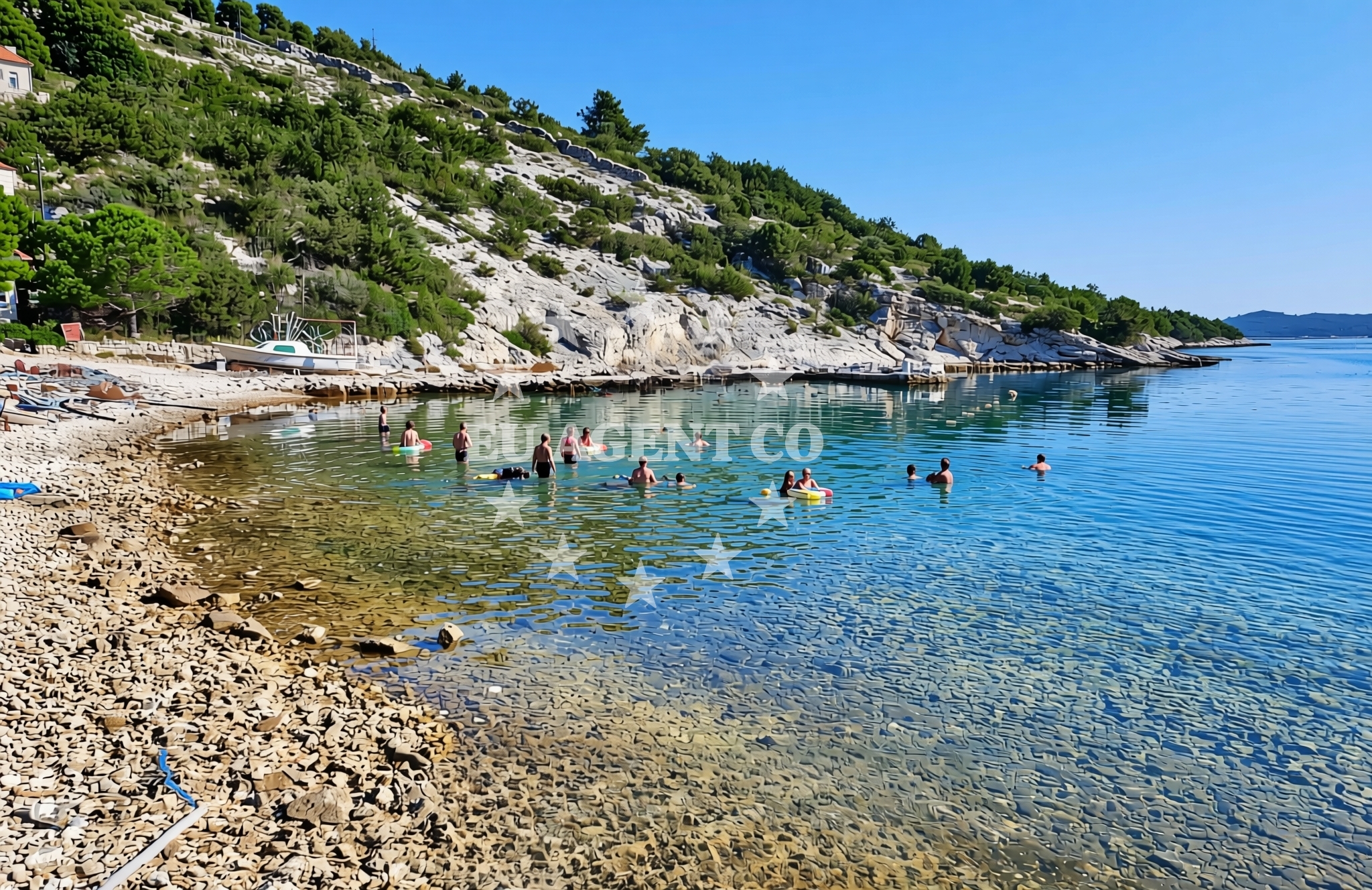
Ovča Beach, located in Savar on the island of Dugi otok, is a secluded stretch of coastline characterized by its rugged terrain and unspoiled natural setting. Nestled along the Adriatic coast, this beach offers a unique experience for visitors seeking a connection with the raw, untouched landscapes of Croatia’s eastern shores.
About this beach
Ovča, Savar (Dugi otok)
Beach: Ovča
Location: Savar (Dugi otok)
Characteristics and facilities
Rocks
Beach character
The beach is defined by its rocky outcrops and uneven shoreline, creating a distinct contrast to the smooth, sandy beaches found elsewhere in the region. These rocks form a natural barrier along the water’s edge, offering visitors a chance to explore tidal pools and observe marine life in their natural habitat. The absence of artificial structures or modern amenities emphasizes the beach’s role as a quiet, natural retreat.
Swimming and shore
Swimming conditions at Ovča are influenced by the rocky terrain. The shoreline’s unevenness means that the beach is best suited for those comfortable with navigating uneven surfaces. The water is clear and cool, typical of the Adriatic, though swimmers should be mindful of the rocky bottom and potential for sudden changes in depth. The beach’s character makes it more suitable for leisurely dips than for activities requiring a flat, sandy shore.
Facilities and activities
There are no official facilities or structures at Ovča Beach. Visitors should plan accordingly, bringing their own supplies for meals, hydration, and shade. The beach’s natural setting means that activities are limited to swimming, rock-hopping, and enjoying the scenery. The lack of amenities makes it an ideal spot for those seeking solitude and a connection with the environment.
Access and location
Access to Ovča Beach is limited to local roads and pathways, with no direct public transportation available. The beach is part of the island of Dugi otok, which is accessible by boat from nearby mainland towns such as Zadar or Šibenik. Visitors arriving by yacht or private boat may find anchoring opportunities in nearby bays, though specific marina facilities are not listed for this exact location.
What to expect
Visitors to Ovča Beach should expect a rugged, natural environment with minimal infrastructure. The beach’s rocky shoreline and lack of facilities mean it is best suited for those seeking a remote, low-impact experience. The area’s isolation ensures a peaceful atmosphere, though it also means that visitors should come prepared with all necessary supplies. The beach is a testament to the raw beauty of Croatia’s Adriatic coastline, offering panoramic views of the sea and surrounding islands.
Practical tips
Due to the beach’s rocky nature, wear sturdy footwear to navigate the shoreline safely. Bring sufficient water and sun protection, as there are no shaded areas or restrooms. Arrive early to secure a spot, as the beach’s seclusion may attract visitors seeking privacy. Respect the natural environment by avoiding littering and minimizing disturbance to local wildlife.
Exploring the coast by yacht
For yacht charter guests, the surrounding waters of Dugi otok offer a range of sailing opportunities. The island is part of a larger network of Adriatic anchorages, with nearby harbors and marinas accessible via short voyages. Yacht charter companies operating in the region often include Dugi otok in itineraries that explore the islands of the northern Adriatic. Visitors arriving by boat may find the area’s natural beauty and seclusion particularly appealing, though specific docking facilities at Ovča Beach itself are not available.
Local Context and Regional Significance
Dugi otok, meaning 'Long Island,' is a protected nature reserve known for its diverse ecosystems and historical significance. The island is home to several archaeological sites, including remnants of ancient Roman settlements. Savar, where Ovča Beach is located, is a small village that retains much of its traditional character. The surrounding area is a popular destination for eco-tourism, with hiking trails and birdwatching opportunities adding to the region’s appeal.
Anchorages in the surrounding area
Anchorages near Ovča, Savar (Dugi otok) Beach include Anchorage — dugi otok and others on Dugi Otok and nearby areas.
- Anchorage — dugi otok — 0.0 NM from beach
- Anchorage — dugi otok — 1.0 NM from beach
- Anchorage — dugi otok — 1.5 NM from beach
- Anchorage — dugi otok — 1.8 NM from beach
- Anchorage — rava — 1.9 NM from beach
- Anchorage — iz — 2.4 NM from beach
- Anchorage — rava — 2.5 NM from beach
- Anchorage — rava — 3.0 NM from beach
Distances are straight-line geographic distances, not sailing routes.
Mooring buoys in the surrounding area
Mooring buoys near Ovča, Savar (Dugi otok) Beach include Jetty — savar — dugi otok and buoy fields on Dugi Otok and Rava.
- Jetty — savar — dugi otok — 1.0 NM from beach
- Jetty — mala rava — 1.4 NM from beach
- Buoy field — brbinj — dugi otok — 1.9 NM from beach
- Restaurant Keko buoys — rava — 2.0 NM from beach
- Villa Rava quai — 2.5 NM from beach
Distances are straight-line geographic distances, not sailing routes.
Marine fuel stations
Marine fuel stations in nearby areas such as Ugljan, Zadar, and Sukosan serve the region around Ovča, Savar (Dugi otok) Beach.
- Ina — preko — ugljan — 7.5 NM from beach
- Ina — zaglav — dugi otok — 7.8 NM from beach
- Ina — zadar — 9.8 NM from beach
- Fuel station — sukosan — 11.8 NM from beach
Distances are straight-line geographic distances, not sailing routes.
Harbours in the surrounding area
Harbours in the surrounding area include Mala Rava, Brbinj — dugi otok, and Vela Rava on Dugi Otok and Rava.
- Mala Rava — 1.4 NM from beach
- Brbinj — dugi otok — 1.9 NM from beach
- Vela Rava — 2.0 NM from beach
- Iž Veli — iz veli — 3.7 NM from beach
- Bršanj — iz mali — 5.4 NM from beach
- Bršanj — iz mali — 5.4 NM from beach
Distances are straight-line geographic distances, not sailing routes.
Marinas in the surrounding area
- Marina Veli Iž — iz veli — 3.7 NM from beach
- Olive Island Marina — sutomiscica — ugljan — 7.0 NM from beach
- Marina Preko — ugljan — 7.4 NM from beach
- Marina Borik — zadar — 9.4 NM from beach
- Vitrenjak Zadar — 9.6 NM from beach
Distances are straight-line geographic distances, not sailing routes.
Restaurants near the beach
Restaurants near Ovča, Savar (Dugi otok) Beach include Ferata — mala rava, Antonio — brbinj — dugi otok, and Villa Rava in Rava and Iz.
- Ferata — mala rava — 1.4 NM from beach
- Antonio — brbinj — dugi otok — 2.0 NM from beach
- Keko — rava — 2.0 NM from beach
- Villa Rava — 2.5 NM from beach
- Mandrac — iz veli — 3.6 NM from beach
- Konoba Luzarija — iz veli — 3.6 NM from beach
- Konoba Kod Barbe — iz veli — 3.6 NM from beach
Distances are straight-line geographic distances, not sailing routes.
Navigation guides for the surrounding area
Navigation guides for Uvala Lokvino, Uvala Saline, and Uvala Knez provide route information for the waters near Ovča, Savar (Dugi otok) Beach.
- Uvala Lokvino (Mala Rava) — 1.6 NM from beach
- Uvala Saline — 2.6 NM from beach
- Uvala Knez — 4.9 NM from beach
- Uvala Kablin — 5.6 NM from beach
- Uvala Brsanj — 5.6 NM from beach
Distances are straight-line geographic distances, not sailing routes.
Yachts from nearby departure bases
Yachts departing from nearby bases such as Brbinj Marina and Zadar Marina Borik operate in the vicinity of Ovča, Savar (Dugi otok) Beach.
Sailing yachts
- Elan Impression 40 (Val) — Ugljan Sutomišćica Olive Island — 7.0 NM from departure base to beach
- Oceanis 40.1 — Zadar Marina Borik — 9.4 NM from departure base to beach
- Bavaria Cruiser 46 (Tkon) — Zadar Marina Borik — 9.4 NM from departure base to beach
Catamarans
- Leopard 50 (Solaia) — Zadar Marina Borik — 9.4 NM from departure base to beach
- Sunreef 60 (SINATA) — Zadar Marina Borik — 9.4 NM from departure base to beach
Motor yachts
- Prestige 460 (Adudu 2) — Zadar Marina Borik — 9.4 NM from departure base to beach
- Prestige 550 Fly (Floria) — Zadar Marina Borik — 9.4 NM from departure base to beach
Motor boats
- Adria 28 Luxus (Ana) — Brbinj Marina — 2.6 NM from departure base to beach
- Quicksilver Activ 905 (Galeb) — Ugljan Sutomišćica Olive — 7.0 NM from departure base to beach
- Antares 9 OB — Zadar Marina Borik — 9.4 NM from departure base to beach
Distances are straight-line geographic distances, not sailing routes.