Most, Vrsar Beach: A Natural Shoreline in the Croatian Coast, Croatia
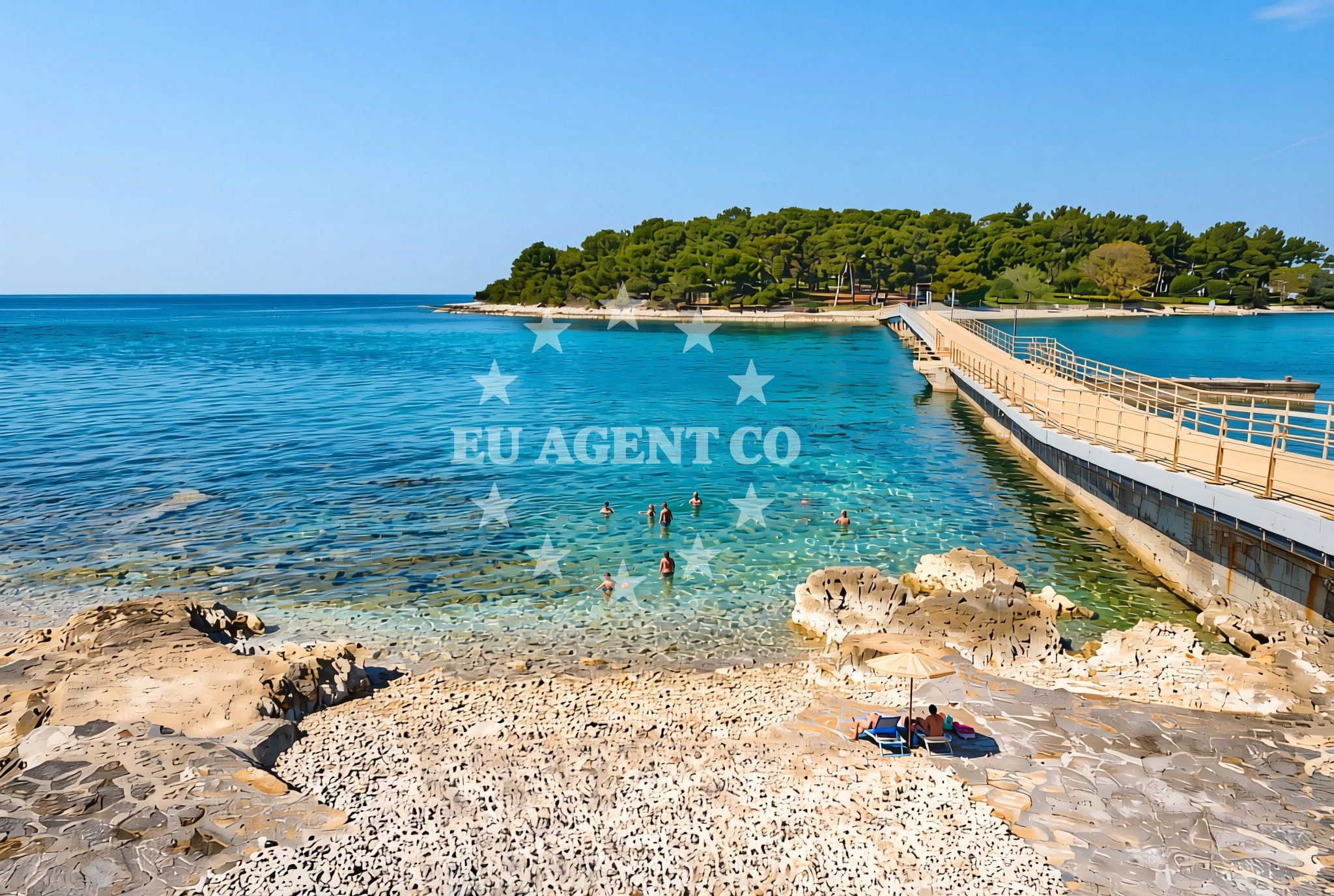
About this beach
Most, Vrsar
Beach: Most
Location: Vrsar
Characteristics and facilities
Gravel, concrete / stone slabs, rocks
200 m
Natural shade
Beach character
The beach's surface is composed of gravel, concrete slabs, and exposed rock formations, creating a rugged terrain that differs from the sandy beaches typical of the region. The 200-meter length offers a modest but varied shoreline, where visitors can walk along the rocky edge or explore the intertidal zones. Natural shade is provided by the coastal topography, offering respite from the sun without the need for artificial structures. This beach is not suited for those seeking soft sands but appeals to visitors interested in a more rugged, natural coastline.Swimming and shore
Swimming conditions at Most, Vrsar Beach are dictated by the shoreline's composition. The mix of gravel and rocks means the water's edge is uneven, requiring caution when entering the sea. The Adriatic's currents and wave action here are moderate, influenced by the nearby coastline's contours. The shore itself is a mix of natural materials, with no artificial structures or facilities to alter the environment. This makes it an ideal spot for those seeking a more adventurous interaction with the sea, though not for those preferring gentle, sandy shorelines.Facilities and activities
There are no structured amenities or facilities at Most, Vrsar Beach. The absence of showers, toilets, or seating reflects its unaltered state. However, the beach's natural setting invites activities such as exploring rocky shorelines, collecting shells, or simply walking along the coast. The nearby town of Vrsar offers access to local services, including restaurants and accommodations, though these are not directly on the beach. No organized activities or rentals are available at the beach itself.Access and location
Most, Vrsar Beach is located in the coastal town of Vrsar, part of the Istrian Peninsula in Croatia. The beach is accessible via local roads leading to the town, with no dedicated parking or pathways indicated in the catalog. Its proximity to Rovinj, a historic town on the Istrian coast, and the wider Adriatic sailing routes makes it a point of interest for both land and sea travelers. The beach's location places it within a region known for its yacht charter opportunities, with nearby marinas and anchorages catering to sailors exploring the Adriatic.What to expect
Visitors to Most, Vrsar Beach should expect a rugged, natural shoreline composed of gravel, concrete slabs, and rocks. The beach's 200-meter length offers a modest but varied landscape, ideal for those seeking a less conventional coastal experience. Natural shade is available, though limited to the topography's contours. There are no facilities or amenities on-site, so visitors should bring their own supplies. The beach's character is defined by its unaltered state, making it a destination for those who appreciate raw, unembellished coastal environments.Practical tips
Bring sturdy footwear for navigating the gravel and rocky terrain. Sunscreen is essential, as natural shade is limited. Consider visiting during low tide to explore the intertidal zones. The beach's lack of facilities means visitors should carry water, snacks, and any necessary items. Check local conditions for safety, as the uneven shoreline may pose challenges for some.Exploring the coast by yacht
The Istrian Peninsula, where Most, Vrsar Beach is located, is a renowned sailing destination in the Adriatic. Yacht charter companies operate from nearby marinas in Vrsar and Rovinj, offering access to the region's scenic coastline. The beach's proximity to these sailing hubs makes it a potential stop for charter guests exploring the area. However, the beach itself is not a designated anchorage or marina, and no specific yacht-related facilities are listed. Sailors may find nearby anchorages or marinas more suitable for docking.Cultural and Regional Context
The Istrian Peninsula, where Most, Vrsar Beach is located, is known for its rich history, vineyards, and medieval towns. Vrsar itself is a small coastal village with a focus on fishing and tourism. The region's maritime traditions are evident in its ports and coastal trails, offering opportunities for both cultural exploration and nautical activities. Nearby, the town of Rovinj provides a contrast with its well-preserved old town and vibrant tourism infrastructure.
Anchorages in the surrounding area
Anchorages in the surrounding area include options in Rovinj and Funtana, offering nearby mooring points and swimming access.
- Kriz — rovinj — 1.1 NM from beach
- Anchorage — rovinj — 1.1 NM from beach
- Anchorage — funtana — 1.9 NM from beach
- Anchorage — funtana — 2.2 NM from beach
- Anchorage — rovinj — 2.4 NM from beach
- Anchorage — rovinj — 2.7 NM from beach
- Anchorage — funtana — 2.8 NM from beach
- Anchorage — porec — 3.7 NM from beach
Distances are straight-line geographic distances, not sailing routes.
Mooring buoys in the surrounding area
- Buoy field — rovinj — 1.1 NM from beach
- Buoy field — vrsar — 1.2 NM from beach
- Buoy field — vrsar — 1.2 NM from beach
- Buoy field — funtana — 1.5 NM from beach
- Jetty — funtana — 2.2 NM from beach
Distances are straight-line geographic distances, not sailing routes.
Marine fuel stations
Marine fuel stations are located in Vrsar and Rovinj, ensuring easy refueling access for boats.
- Crodux — vrsar — 0.9 NM from beach
- Crodux — vrsar — 0.9 NM from beach
- Ina — rovinj — 3.2 NM from beach
- Ina — porec — 5.5 NM from beach
Distances are straight-line geographic distances, not sailing routes.
Harbours in the surrounding area
- Vrsar — 0.9 NM from beach
- Valkanela — funtana — 1.7 NM from beach
- Amarin — rovinj — 2.0 NM from beach
- Funtana — 2.7 NM from beach
- Bijela Uvala — porec — 3.2 NM from beach
- Valdibora — rovinj — 3.2 NM from beach
Distances are straight-line geographic distances, not sailing routes.
Marinas in the surrounding area
Marinas in the surrounding area include Marina Valalta and Marina Vrsar in Rovinj and Vrsar, providing facilities for boaters.
- Marina Valalta — rovinj — 1.0 NM from beach
- Marina Vrsar — 1.0 NM from beach
- Marina Funtana — 2.7 NM from beach
- ACI Marina Rovinj — 3.7 NM from beach
- Marina Parentium — porec — 4.3 NM from beach
Distances are straight-line geographic distances, not sailing routes.
Restaurants near the beach
Restaurants near the beach are located in Vrsar, offering dining options for visitors.
- Konoba Petra — vrsar — 0.7 NM from beach
- Konoba Amor — vrsar — 0.9 NM from beach
- Dvi Palme — vrsar — 0.9 NM from beach
- La Rosa 2 — vrsar — 0.9 NM from beach
- Pizzeria Fancita — vrsar — 0.9 NM from beach
- Azzuro — vrsar — 0.9 NM from beach
- Miramare — vrsar — 0.9 NM from beach
Distances are straight-line geographic distances, not sailing routes.
Navigation guides for the surrounding area
Navigation guides for the surrounding area include Limski Kanai and Poree, helping with route planning in the region.
- Limski Kanai — 0.6 NM from beach
- Poree — 5.6 NM from beach
- Luka Crvar and Marina Crvar-Porat — 8.8 NM from beach
- Novi grad — 11.3 NM from beach
Distances are straight-line geographic distances, not sailing routes.
Yachts from nearby departure bases
Yachts from nearby departure bases operate out of Poreč Marina Funtana, providing sailing options in the area.
Sailing yachts
- Bavaria 40 (Conny) — Poreč Marina Funtana — 2.6 NM from departure base to beach
- Bavaria 40 Cruiser (Franzi) — Poreč Marina Funtana — 2.6 NM from departure base to beach
- Bavaria 49 (Tortola) — Poreč Marina Funtana — 2.6 NM from departure base to beach
- Bavaria 35 Cruiser (Salsa) — Poreč Marina Funtana — 2.6 NM from departure base to beach
- Bavaria 32 (Vroni) — Poreč Marina Funtana — 2.6 NM from departure base to beach
- Bavaria 46 Cruiser (Hansi) — Poreč Marina Funtana — 2.6 NM from departure base to beach
- Bavaria 46 Cruiser (Barbados) — Poreč Marina Funtana — 2.6 NM from departure base to beach
- Bavaria 44 (Franzi) — Poreč Marina Funtana — 2.6 NM from departure base to beach
- Gib Sea 43 (Leonardo) — Poreč Marina Funtana — 2.6 NM from departure base to beach
Catamarans
- Lagoon Power 44 (Monteki) — Poreč Marina Funtana — 2.6 NM from departure base to beach
Distances are straight-line geographic distances, not sailing routes.