Montun istok, Viganj Beach: A Coastal Gem in Croatia
About this beach
Montun istok, Viganj
Beach: Montun istok
Location: Viganj
Characteristics and facilities
Gravel, concrete / stone slabs
5 m
Restaurant / snack bar
Caffe bar / Drinks stand
Beach character
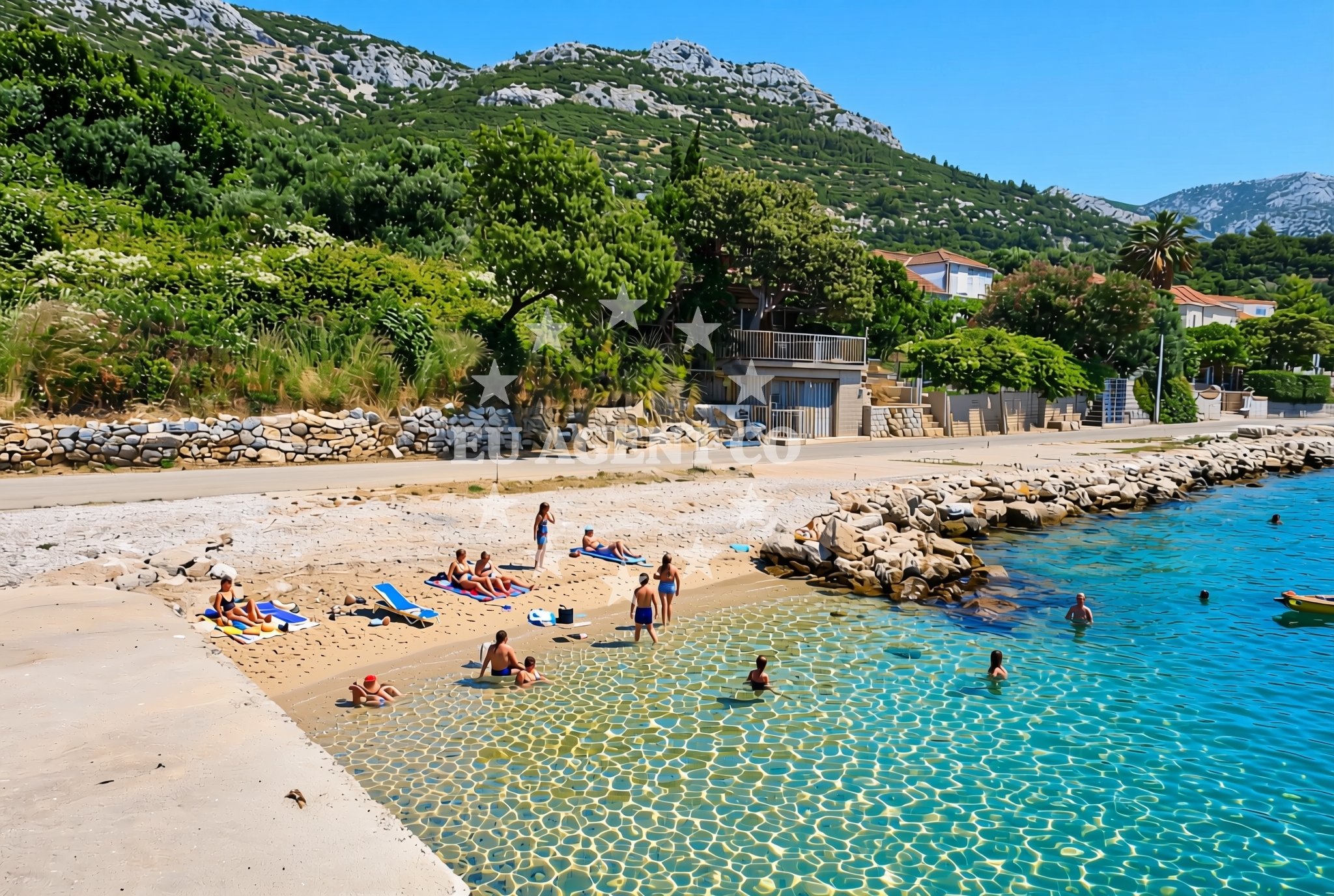
The shoreline of Montun istok is composed of gravel and concrete slabs, creating a firm and uneven walking surface. This characteristic makes it less ideal for sunbathing but suitable for those who prefer a more utilitarian beach environment. The beach’s depth is noted as 5 meters, though this figure’s exact reference (whether water depth or shoreline width) is unspecified. The area’s minimal development aligns with its role as a functional access point rather than a recreational hotspot. The presence of a restaurant, snack bar, and caffe bar suggests it caters to passing visitors rather than long-term stays.Swimming and shore
Swimming conditions at Montun istok are not explicitly detailed in the beach’s records. The 5-meter depth measurement, if applicable to water depth, may indicate moderate conditions for swimmers. However, the gravel and concrete slabs on the shore could pose challenges for wading or entering the water. The beach’s lack of designated swimming zones or lifeguard services implies it is not a primary destination for aquatic recreation.Facilities and activities
On-site facilities include a restaurant, snack bar, and caffe bar, providing basic refreshments for visitors. There are no structured activities listed, and the beach does not appear to host organized events or sports. The absence of additional amenities such as showers, parking, or seating further emphasizes its role as a minimalistic coastal access point.Access and location
Montun istok is situated in Viganj, a small settlement on Croatia’s eastern Adriatic coast. Its coordinates (42.984906°N, 17.09499°E) place it near the broader Dalmatian region, an area known for its scenic coastal routes. While the beach’s road access is not described in the catalog, its inclusion in Euro-Agent’s beach map suggests it is reachable via local roads. The surrounding area is part of a network of Adriatic settlements that historically served as waystations for maritime travel.What to expect
Expect a beach defined by its gravel and concrete slabs, which may require sturdy footwear for comfort. The on-site restaurant, snack bar, and caffe bar offer convenience for light meals and drinks. The beach is not designed for leisurely relaxation but functions as a practical coastal access point. Its lack of extensive facilities or recreational infrastructure aligns with its utilitarian purpose.Practical tips
Bring closed-toe shoes to navigate the gravel and concrete surface comfortably. The on-site dining options are ideal for quick meals, but plan accordingly if extended stays are needed. Check local tide patterns, as the beach’s 5-meter depth could influence water conditions.Exploring the coast by yacht
Montun istok lies within the Adriatic’s Dalmatian coast, a region renowned for its yacht charter opportunities. Euro-Agent’s platform connects visitors to motor yachts and sailboats based in nearby marinas, enabling exploration of Croatia’s coastal towns and islands. While the beach itself is not a primary anchorage, its location offers a gateway to sailing routes that include historic ports and scenic bays. Charter guests may use this area as a reference point for navigating the region’s rugged coastline.Historical Context of Viganj
Viganj, the settlement near Montun istok, has historical ties to maritime trade routes that once connected the Adriatic to inland Europe. Though modern infrastructure has reduced its role as a commercial hub, remnants of its past remain in local architecture and coastal pathways. This historical backdrop adds depth to the beach’s utilitarian character, reflecting centuries of coastal activity.Anchorages in the surrounding area
Anchorages in Korcula and Loviste are situated near Montun istok, Viganj Beach.
- Anchorage — korcula — 1.3 NM from beach
- Anchorage — korcula — 1.4 NM from beach
- Anchorage — korcula — 1.7 NM from beach
- Anchorage — korcula — 1.7 NM from beach
- Anchorage — racisce — korcula — 2.3 NM from beach
- Anchorage — loviste — 2.5 NM from beach
- Anchorage — korcula — 2.8 NM from beach
- Anchorage — racisce — korcula — 3.3 NM from beach
Distances are straight-line geographic distances, not sailing routes.
Mooring buoys in the surrounding area
Mooring buoys in Korcula and Loviste provide options for vessels near Montun istok, Viganj Beach.
- Jetty — korcula — 1.7 NM from beach
- Konoba Estravaganca buoys - Duba — konoba estravaganca buoys duba — loviste — 2.7 NM from beach
- Fuel jetty — korcula — 3.0 NM from beach
- Jetty — loviste — 3.6 NM from beach
- Jetty — loviste — 3.6 NM from beach
Distances are straight-line geographic distances, not sailing routes.
Marine fuel stations
- Fuel station — korcula — 3.0 NM from beach
- Fuel station — ploce — 15.5 NM from beach
- Ina — vela luka — korcula — 16.8 NM from beach
- Ina — ubli — lastovo — 18.7 NM from beach
Distances are straight-line geographic distances, not sailing routes.
Harbours in the surrounding area
Harbours in Viganj and Korcula are located in close proximity to Montun istok, Viganj Beach.
- Viganj — 0.3 NM from beach
- Kučišće — kucisce — 0.9 NM from beach
- Korčula W harbour — korcula — 2.2 NM from beach
- Korčula E harbour — korcula — 2.4 NM from beach
- Račišće — racisce — korcula — 3.4 NM from beach
- Orebić — orebic — 3.6 NM from beach
Distances are straight-line geographic distances, not sailing routes.
Marinas in the surrounding area
- ACI Marina Korčula — korcula — 2.4 NM from beach
- Marina Lumbarda — korcula — 5.0 NM from beach
- Marina Tučepi — marina tucepi — 16.8 NM from beach
- Marina Korkyra — vela luka — korcula — 16.9 NM from beach
- Marina Solitudo — lastovo — 17.8 NM from beach
Distances are straight-line geographic distances, not sailing routes.
Restaurants near the beach
Restaurants in Korcula are clustered near Montun istok, Viganj Beach.
- Restaurant — korcula — 1.6 NM from beach
- Mimi's Bistro at Tara's Lodge — korcula — 1.7 NM from beach
- Mimi's Bistro at Tara's Lodge — korcula — 1.7 NM from beach
- Restaurant — korcula — 2.3 NM from beach
- Aterina — korcula — 2.3 NM from beach
- Restaurant — korcula — 2.3 NM from beach
- Adio Mare — korcula — 2.3 NM from beach
Distances are straight-line geographic distances, not sailing routes.
Navigation guides for the surrounding area
Navigation guides for Uvala Vrbovica and surrounding areas assist near Montun istok, Viganj Beach.
- Uvala Vrbovica — 1.4 NM from beach
- Uvala Banja — 1.9 NM from beach
- Uvala Kneza — 2.1 NM from beach
- Luka Racisce — 3.2 NM from beach
- Otocic Badija — 3.7 NM from beach
Distances are straight-line geographic distances, not sailing routes.
Yachts from nearby departure bases
Yachts based in Ploče and Tučepi operate at distances from Montun istok, Viganj Beach.
Sailing yachts
- Elan 40 Impression (Karleta) — Ploče City Port — 15.4 NM from departure base to beach
- More 55 (MRS. ROBINSON) — Ploče City Port — 15.4 NM from departure base to beach
- Salona 44 (SAMOA) — Ploče City Port — 15.4 NM from departure base to beach
- Sun Odyssey 349 (Visnjica) — Ploče City Port — 15.4 NM from departure base to beach
- Elan 514 Impression (Cesarica III) — Ploče City Port — 15.4 NM from departure base to beach
- Sun Odyssey 419 (Luka Ploce) — Ploče City Port — 15.4 NM from departure base to beach
- Sun Odyssey 349 (Porto Tolero) — Ploče City Port — 15.4 NM from departure base to beach
- Bavaria 40 Cruiser (LADY BUTTERFLY) — Tučepi Port — 16.8 NM from departure base to beach
Catamarans
- Lagoon 450 Fly (Alba Mouse) — Ploče City Port — 15.4 NM from departure base to beach
Motor yachts
- Princess V53 (Chablis) — Makarska Port — 18.7 NM from departure base to beach
Distances are straight-line geographic distances, not sailing routes.