Mišnjaci, Mandre (Pag) Beach, Croatia
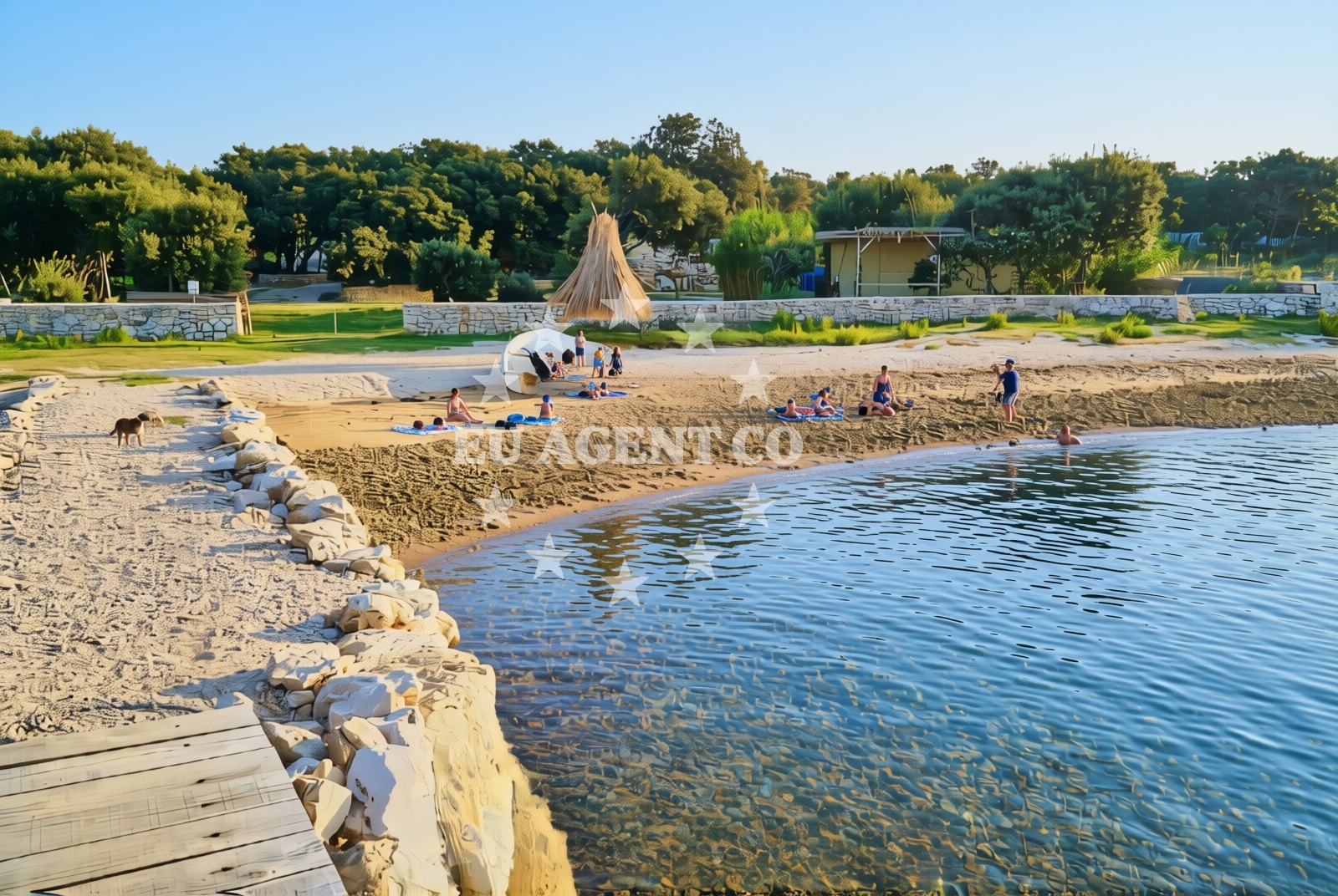
Mišnjaci Beach, located in the village of Mandre on Pag Island, presents a distinctive coastal experience along Croatia's northern Adriatic coast. This 110-meter stretch of gravel shoreline offers a rare contrast to the region's more common pebbled and sandy beaches. Situated on the eastern coast of Pag, the beach faces the open waters of the Adriatic Sea, where the island's rugged terrain meets the sea. The gravel composition creates a textured walking surface, making it more suited for leisurely strolls than swimming. Visitors seeking this beach will find it nestled within the broader Mandre settlement, a coastal community known for its traditional stone houses and proximity to Pag's famous salt pans.
About this beach
Mišnjaci, Mandre (Pag)
Beach: Mišnjaci
Location: Mandre (Pag)
Characteristics and facilities
Gravel
110 m
Beach character
The beach's defining feature is its gravel substrate, which extends along the shoreline in a narrow strip. The stones range in size from small pebbles to larger, angular fragments, creating a surface that is firm underfoot but uneven. This texture makes the beach more suitable for walking or sitting than for sunbathing, though the gravel provides a stable base for exploring the shoreline. The beach is relatively short, measuring just 110 meters in length, and is flanked by low-lying coastal terrain that slopes gently toward the sea. The surrounding landscape is characterized by the typical limestone formations of Pag Island, with sparse vegetation along the beachfront. The absence of significant dunes or vegetation means the beach has a more exposed feel compared to other Adriatic shorelines.
Swimming and shore
While the beach is not ideal for swimming due to its gravel composition, the adjacent waters offer clear visibility and moderate currents typical of the northern Adriatic. The shoreline is best explored on foot, with the gravel providing a stable surface for walking along the water's edge. The beach's position on Pag's eastern coast means it is exposed to the full force of the Adriatic's waves, making it unsuitable for children or those seeking calm waters. However, the area is well-suited for those interested in observing coastal geology or collecting unique stone formations. The lack of sandy areas means there are no natural beaches for sunbathing, but the open views of the sea and surrounding landscape provide an alternative form of coastal enjoyment.
Facilities and activities
No facilities are explicitly listed for Mišnjaci Beach, reflecting its status as a more natural, undeveloped shoreline. There are no reported amenities such as showers, restrooms, or changing rooms, and the beach appears to be primarily accessed on foot. The absence of infrastructure means visitors should bring their own supplies, including water, sunscreen, and seating. The beach's unique gravel surface may appeal to those seeking a different coastal experience, though it is not recommended for families with young children. The surrounding area of Mandre offers limited local amenities, with the nearest services located in the village center. For those interested in broader activities, Pag Island's salt pans and the nearby village of Novalja provide additional points of interest.
Access and location
Reaching Mišnjaci Beach requires navigating the coastal paths of Mandre, a village on Pag Island's eastern shore. The beach is accessible via local roads that connect Mandre to the rest of Pag, with the nearest major road network located in the village center. Pag Island is served by a ferry route from Zadar, with crossings operating seasonally. For visitors arriving by car, the island's main road (D8) provides access to Mandre, though parking options in the area are limited due to the village's compact layout. The beach's position on the island's periphery means it is less frequented than Pag's more central beaches, offering a quieter alternative for those seeking solitude. The Adriatic Sea's proximity to the beach makes it a potential starting point for short coastal hikes or boat excursions along Pag's shoreline.
What to expect
Visitors to Mišnjaci Beach should expect a unique coastal experience defined by its gravel shoreline and exposed position on Pag Island. The beach is best suited for those interested in exploring the natural character of the Adriatic coast, with its firm, uneven surface offering a distinct contrast to the region's more common pebbled and sandy beaches. The lack of facilities means visitors should plan accordingly, bringing their own supplies for comfort. The beach's short length and open exposure make it more suitable for casual visits than for extended stays. Those seeking a tranquil, less-developed shoreline will find Mišnjaci to be a rare example of Pag's natural coastal landscapes, though the gravel surface may not appeal to all visitors.
Practical tips
For visitors planning a trip to Mišnjaci Beach, consider the following: Wear sturdy footwear to navigate the gravel shoreline comfortably. Bring a towel or mat for sitting, as the stones may be uncomfortable for prolonged contact. Sunscreen is essential due to the open exposure of the beach. The absence of facilities means visitors should carry water and snacks. The beach's position on Pag's eastern coast makes it a good vantage point for observing the island's limestone formations and the broader Adriatic landscape.
Exploring the coast by yacht
For yacht charter guests exploring the northern Adriatic, Mišnjaci Beach offers a glimpse into Pag Island's less-traveled coastal areas. The beach's position on the island's eastern shore places it within reach of the broader sailing routes that connect Pag to Zadar, the mainland, and other Dalmatian islands. While not a primary anchorage point, the beach's proximity to Mandre and the surrounding coastline provides a potential stop for those seeking to explore Pag's more secluded shorelines. Yacht charterers may find the area useful for short excursions, with the nearby village of Novalja offering a base for further exploration of the island's cultural and natural attractions.
Pag Island's Coastal Geography
Pag Island, where Mišnjaci Beach is located, is known for its unique geological features, including its famous salt pans and limestone cliffs. The island's eastern coast, where Mandre is situated, is characterized by a series of narrow beaches and rocky inlets. This contrasts with the western coast, which has more extensive sandy beaches. The gravel composition of Mišnjaci Beach is consistent with the island's broader coastal patterns, which include a mix of pebble, sand, and rock shorelines. Pag's coastal landscape is shaped by its position in the Adriatic Sea, with the island's terrain reflecting the region's karst geology.
Historical Context of Mandre
The village of Mandre, where Mišnjaci Beach is located, has historical ties to Pag's traditional way of life. The area was historically known for its salt production, with the island's unique microclimate supporting the creation of Pag salt, a prized product in the region. The village's stone houses and narrow streets reflect centuries of habitation, with many structures dating back to the medieval period. While Mandre is a small settlement, it serves as a gateway to Pag's more remote coastal areas, including the gravel shoreline of Mišnjaci Beach.
Anchorages in the surrounding area
- Anchorage — mandre — pag — 0.2 NM from beach
- Anchorage — mandre — pag — 0.5 NM from beach
- Anchorage — mandre — pag — 1.1 NM from beach
- Anchorage — skrda — 2.7 NM from beach
- Anchorage — maun — 2.8 NM from beach
- Straško — novalja — pag — 3.1 NM from beach
- Anchorage — novalja — pag — 3.1 NM from beach
- Potcrkvine — maun — 3.2 NM from beach
Distances are straight-line geographic distances, not sailing routes.
Mooring buoys in the surrounding area
- Jetty — simuni — pag — 3.3 NM from beach
- Jetty — zubovici — pag — 3.4 NM from beach
- Jetty — zubovici — pag — 3.6 NM from beach
- Buoy field — novalja — pag — 4.1 NM from beach
- Drljanda — stara novalja — pag — 6.6 NM from beach
Distances are straight-line geographic distances, not sailing routes.
Marine fuel stations
- Ina — rab — 16.9 NM from beach
- Ina — mali losinj — 19.2 NM from beach
- Adria Oil — mali losinj — 19.6 NM from beach
- Tifon — nerezine — losinj — 24.3 NM from beach
Distances are straight-line geographic distances, not sailing routes.
Harbours in the surrounding area
- Novalja — pag — 3.9 NM from beach
- Žigljen — zigljen — pag — 5.4 NM from beach
- Stara Novalja — pag — 6.2 NM from beach
- Pag — 6.8 NM from beach
- Prizna — 6.9 NM from beach
- Karlobag — 7.2 NM from beach
Distances are straight-line geographic distances, not sailing routes.
Marinas in the surrounding area
- ACI Marina Šimuni — simuni — pag — 2.5 NM from beach
- ACI Marina Rab — 16.9 NM from beach
- Y/C Marina Mali Lošinj — mali losinj — 19.3 NM from beach
- Marina Lošinj — mali losinj — 19.5 NM from beach
- ACI Marina Supetarska Draga — rab — 20.0 NM from beach
Distances are straight-line geographic distances, not sailing routes.
Restaurants near the beach
- Maestral — simuni — pag — 2.4 NM from beach
- Bistro Šimuni — simuni — pag — 2.7 NM from beach
- Ribarska Koliba Šimuni — simuni — pag — 2.7 NM from beach
- Didova Kuča — simuni — pag — 2.7 NM from beach
- Pizzeria Villa Olea — simuni — pag — 2.9 NM from beach
- Margarita — novalja — pag — 3.3 NM from beach
- Restaurant — novalja — pag — 3.4 NM from beach
Distances are straight-line geographic distances, not sailing routes.
Navigation guides for the surrounding area
- Caska — 3.2 NM from beach
- Novalja — 3.7 NM from beach
- Uvala Prizna — 7.0 NM from beach
- Luka Olib — 8.8 NM from beach
- Uvala Bliznica — 10.0 NM from beach
Distances are straight-line geographic distances, not sailing routes.
Yachts from nearby departure bases
Sailing yachts
- First 45 (Egeria) — Šimuni Kolan ACI Marina — 2.4 NM from departure base to beach
- Bavaria 46 Cruiser (DEA) — Mali Lošinj — 19.3 NM from departure base to beach
- Dufour 360 Grand (Vanila) — Mali Lošinj — 19.3 NM from departure base to beach
Motor yachts
- Absolute 50 Fly (Acrobat) — Rab ACI Marina — 16.9 NM from departure base to beach
Motor boats
- Balt 818 Titanium (Valentina 2) — Novalja — 3.8 NM from departure base to beach
- Balt 818 Titanium (Valentina) — Novalja — 3.8 NM from departure base to beach
- BWA Sport 22GT (BWA ) — Pag City Port — 6.9 NM from departure base to beach
- Merry Fisher 895 — Povljana Marina — 12.2 NM from departure base to beach
- Galeon Galia 630 (287670ML) — Mali Lošinj — 19.3 NM from departure base to beach
- Galeon Galia 700 — Mali Lošinj — 19.3 NM from departure base to beach
Distances are straight-line geographic distances, not sailing routes.