Marinica istok, Ston Beach, Croatia
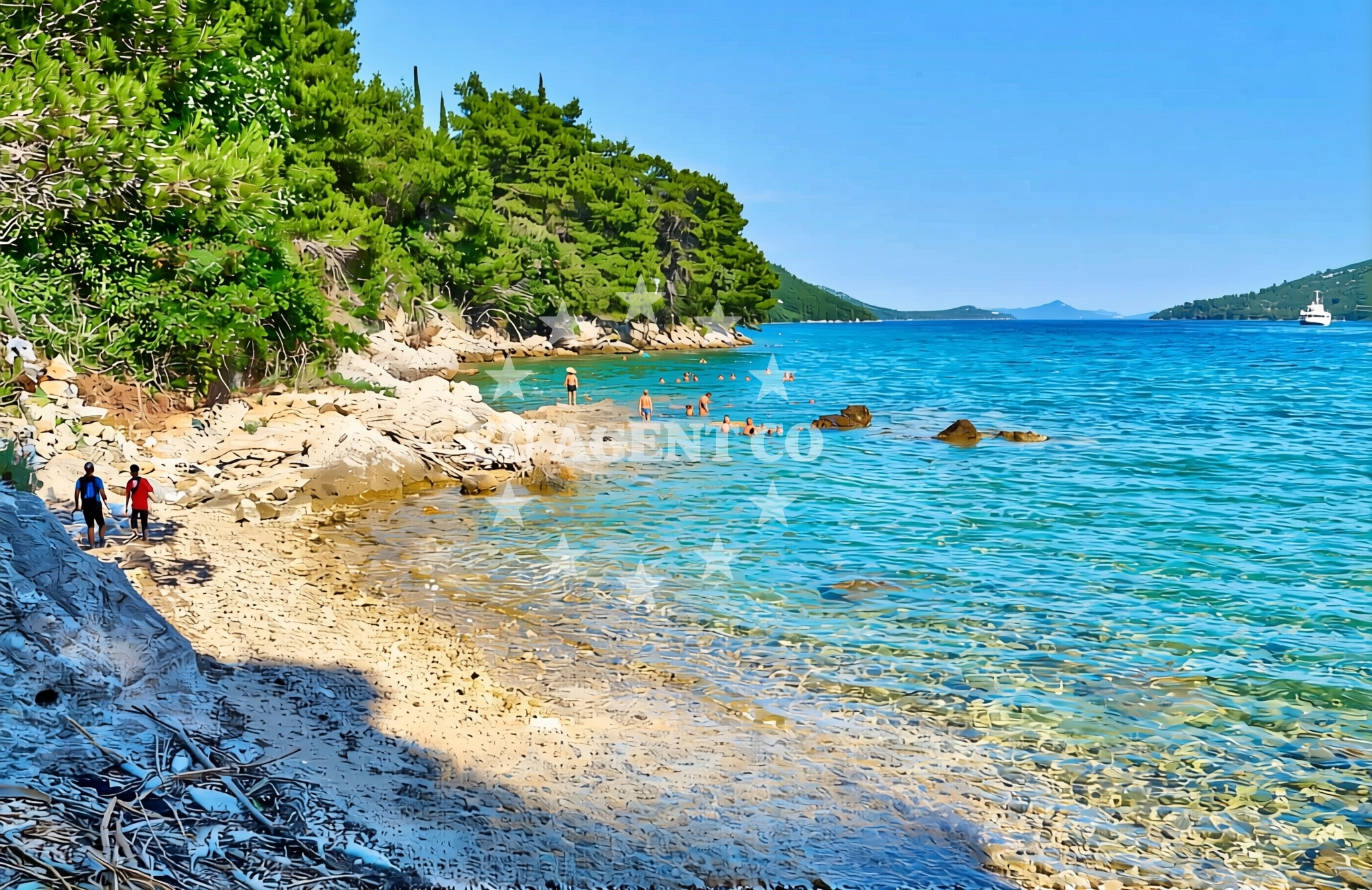
Marinica istok, Ston Beach lies along the southern coast of the Pelješac Peninsula in Croatia, positioned near the ancient town of Ston. This gravel beach stretches approximately 50 meters along the shoreline, offering a quiet stretch of coast with natural shade provided by coastal vegetation. Its proximity to Ston, a settlement with a rich history of fortifications and maritime traditions, connects it to the broader cultural and nautical landscape of the region.
About this beach
Marinica istok, Ston
Beach: Marinica istok
Location: Ston
Characteristics and facilities
Gravel
50 m
Natural shade
Beach character
The beach consists of gravel, creating a firm surface that may appeal to visitors seeking a less sandy alternative. Its 50-meter length provides a modest shoreline, with natural shade available from nearby vegetation. While no formal facilities are listed in the beach catalog, the surrounding area of Ston offers historical and cultural points of interest that may enhance a visit to the region.
Swimming and shore
Swimming conditions at Marinica istok are influenced by the Adriatic Sea's typical characteristics for this latitude. The gravel substrate may make it less ideal for young children, though the beach's short length means it remains a manageable option for those seeking a quiet coastal experience. The shore is marked by natural features, with no artificial structures or designated swimming zones indicated in the catalog.
Facilities and activities
No formal amenities or activities are explicitly listed for Marinica istok, Ston Beach in the authoritative beach catalog. Visitors should expect a basic coastal experience without showers, toilets, or parking facilities. The beach's character is defined by its natural features rather than structured amenities, making it a more rustic option compared to developed coastal areas.
Access and location
Marinica istok is located in the vicinity of Ston, a town known for its medieval walls and historical significance as a defensive stronghold. The beach's position on the Pelješac Peninsula places it near key maritime routes and sailing areas of the Adriatic. While specific access details like road proximity or parking are not documented in the beach catalog, the broader region of Ston is accessible via coastal roads and ferry connections to other parts of the Dalmatian coast.
What to expect
Visitors to Marinica istok, Ston Beach should anticipate a gravel shoreline with natural shade, suitable for those seeking a more secluded coastal experience. The beach's short length and lack of formal facilities mean it is best suited for individuals looking to enjoy the Adriatic coastline away from more developed areas. The surrounding settlement of Ston offers historical context, with its ancient walls and maritime heritage providing additional interest for visitors exploring the region.
Practical tips
Given the beach's gravel composition, visitors may wish to wear appropriate footwear for walking on the shoreline. The natural shade provided by coastal vegetation can offer relief from direct sunlight, though sunscreen is still recommended for extended exposure. Those interested in exploring the broader area may find Ston's historical sites and nearby coastal routes of particular interest.
Exploring the coast by yacht
The Pelješac Peninsula, where Marinica istok is located, is a recognized sailing area in the Adriatic, offering opportunities for motor yacht and sailing yacht charters. The proximity to Ston and the broader Dalmatian coast means that this beach is situated within a region known for its scenic coastal routes, historic maritime sites, and access to other Adriatic destinations. Yacht charter guests exploring this area may find the surrounding waters particularly appealing for their combination of cultural heritage and natural beauty.
Historical Context of Ston
The town of Ston, near Marinica istok, is home to some of the most well-preserved medieval fortifications in Europe. Its walls, built during the 13th and 14th centuries, formed part of a defensive system that protected the region for centuries. This historical context adds depth to any visit to the surrounding coastline, making it a point of interest for both land and sea travelers.
Anchorages in the surrounding area
Anchorages in Broce and Mali Ston are within a short distance of the beach.
- Ribnja — broce — 1.4 NM from beach
- Anchorage — broce — 1.4 NM from beach
- Anchorage — mali ston — 1.6 NM from beach
- Anchorage — broce — 1.6 NM from beach
- Anchorage — prapratno — 1.9 NM from beach
- Anchorage — broce — 2.1 NM from beach
- Anchorage — broce — 3.3 NM from beach
- Anchorage — olipa — 4.2 NM from beach
Distances are straight-line geographic distances, not sailing routes.
Mooring buoys in the surrounding area
Mooring buoys in Kobas and Prapratno are located near the beach.
- Quay — kobas — 1.6 NM from beach
- Lukas Taverna jetty — kobas — 1.6 NM from beach
- Konoba Nico jetty — kobas — 1.6 NM from beach
- Quay — prapratno — 1.9 NM from beach
- Quay — slano — 6.1 NM from beach
Distances are straight-line geographic distances, not sailing routes.
Marine fuel stations
- Fuel station — sobra — mljet — 6.6 NM from beach
- Fuel station — ploce — 18.5 NM from beach
- Ina — dubrovnik — 18.8 NM from beach
- Ina — dubrovnik — 20.2 NM from beach
Distances are straight-line geographic distances, not sailing routes.
Harbours in the surrounding area
Harbors in Ston and Mali Ston are situated close to the beach.
- Ston — 1.1 NM from beach
- Mali Ston — 1.6 NM from beach
- Prapranto Ferry Harbour — prapratno — 1.9 NM from beach
- Hodilje — 2.5 NM from beach
- Doli — 3.5 NM from beach
- Okuklje — mljet — 6.2 NM from beach
Distances are straight-line geographic distances, not sailing routes.
Marinas in the surrounding area
- ACI Marina Slano — 7.9 NM from beach
- Marina Frapa Dubrovnik — 18.8 NM from beach
- ACI Marina Dubrovnik — 20.2 NM from beach
- Marina Lumbarda — korcula — 24.8 NM from beach
- ACI Marina Korčula — korcula — 26.8 NM from beach
Distances are straight-line geographic distances, not sailing routes.
Restaurants near the beach
Restaurants in Mali Ston and Kobas are nearby, offering dining options close to the beach.
- Bota Sare — mali ston — 1.5 NM from beach
- Gastro Mare — kobas — 1.6 NM from beach
- Luka's Taverna — lukas taverna — kobas — 1.6 NM from beach
- Nico — kobas — 1.7 NM from beach
- Restaurant — prapratno — 1.9 NM from beach
Distances are straight-line geographic distances, not sailing routes.
Navigation guides for the surrounding area
Navigation guides for Broce and Mali Ston provide route information near the beach.
- Broce — 0.1 NM from beach
- Excursions — 1.0 NM from beach
- Mali Ston — 1.4 NM from beach
- Hodilje — 2.4 NM from beach
- Luka — 2.7 NM from beach
Distances are straight-line geographic distances, not sailing routes.
Yachts from nearby departure bases
Sailing yachts
- Oceanis 45 (Soul) — Slano ACI Marina — 7.9 NM from departure base to beach
- Elan 45 Impression (Skyfall) — Slano ACI Marina — 7.9 NM from departure base to beach
- Elan 50 Impression (Timeless) — Slano ACI Marina — 7.9 NM from departure base to beach
- Oceanis 45 (Mambo 1) — Slano ACI Marina — 7.9 NM from departure base to beach
- Oceanis 45 (Cancan) — Slano ACI Marina — 7.9 NM from departure base to beach
Catamarans
- Lagoon 50 (TWIN JOY) — Slano ACI Marina — 7.9 NM from departure base to beach
- Lagoon 450 Flybridge (ANJA I) — Slano ACI Marina — 7.9 NM from departure base to beach
- Lagoon 42 (MALA KATE I) — Slano ACI Marina — 7.9 NM from departure base to beach
- Lagoon 40 (SAILOR MOON) — Slano ACI Marina — 7.9 NM from departure base to beach
- Astrea 42 (Wave) — Slano ACI Marina — 7.9 NM from departure base to beach
Distances are straight-line geographic distances, not sailing routes.