Kornati (Kornat): Beaches and Coves, Croatia
About this beach
Kornati (Kornat): beaches and coves
Beach character
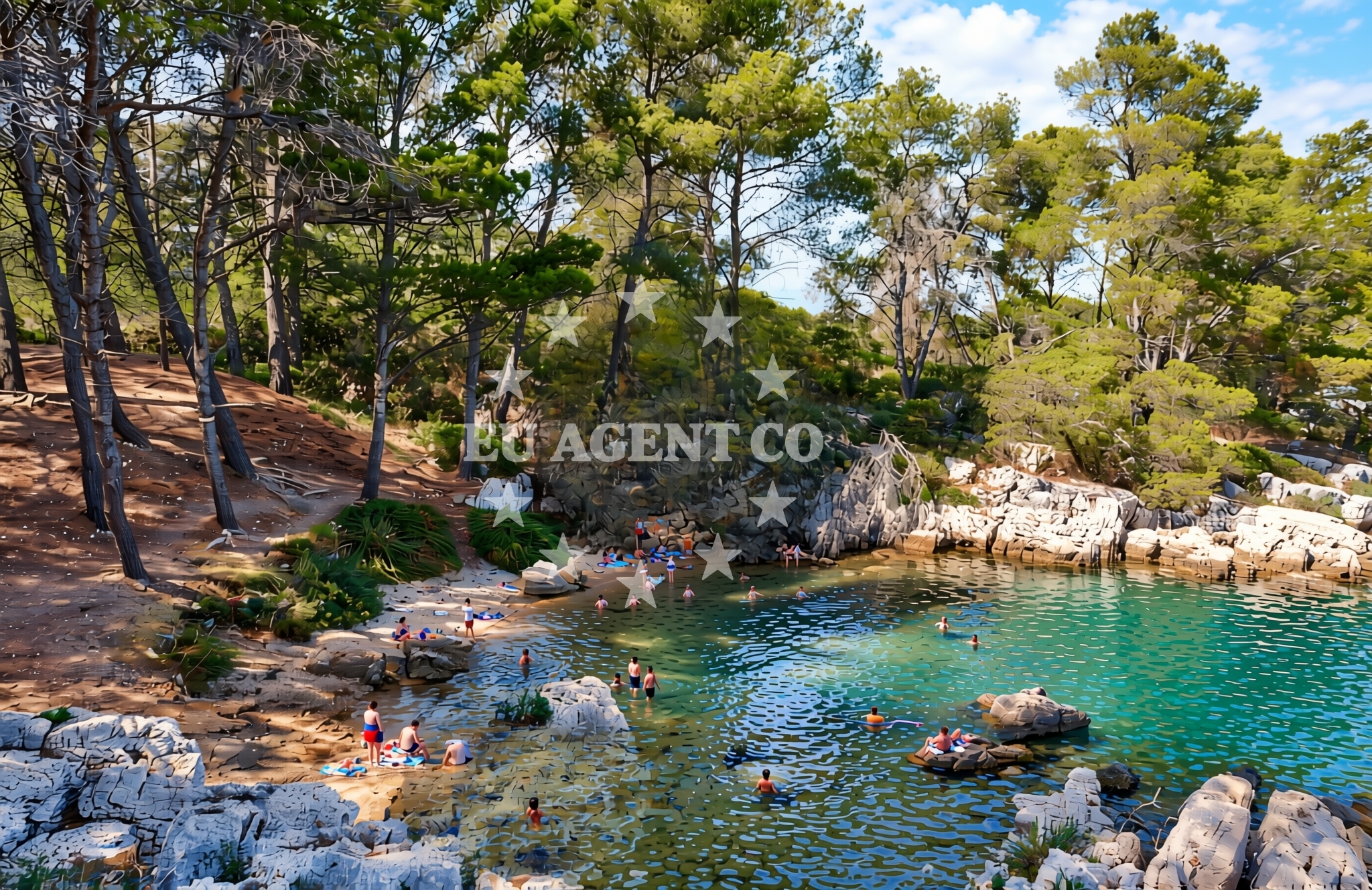
The beaches of Kornati are defined by their geological diversity. Limestone cliffs, pebbled shores, and shallow bays create a mosaic of coastal landscapes. Many coves are sheltered by rocky outcrops, offering calm waters ideal for swimming and snorkeling. The absence of artificial structures preserves the natural contours of the shoreline, with some beaches accessible only by boat. The interplay of sunlight and sea creates shifting patterns of light across the water, particularly noticeable in the shallower areas near the islands' western edges.Swimming and shore
Swimming conditions are generally favorable, with water temperatures reaching pleasant levels during summer months. The shallower bays provide safe entry points for swimmers, while the deeper channels between islands attract divers and snorkelers. The seabed often features a mix of sand, rock, and marine vegetation, supporting a rich ecosystem of fish and invertebrates. While no formal lifeguard services exist, the relative isolation of the beaches means visitors should exercise standard maritime safety precautions.Facilities and activities
The beaches themselves lack permanent infrastructure, reflecting the protected status of the area. However, the surrounding islands of the Kornati archipelago host small villages with basic amenities. Nearby, the island of Kornat (the largest in the group) offers limited accommodations, primarily focused on nautical tourism. Activities centered around the beaches include kayaking between islets, stand-up paddleboarding in calmer waters, and exploring the underwater world through guided snorkeling tours. The absence of motorized watercraft in the national park preserves the acoustic tranquility of the area.Access and location
Reaching the beaches of Kornati requires a boat journey, as no roads connect the islands to the mainland. The nearest permanent settlement is the village of Kornat, located on the largest island. Charter yachts and organized boat tours from nearby ports like Split or Šibenik provide the primary means of access. The archipelago's position within the Adriatic Sea makes it a natural waypoint for sailors navigating between the Pelješac Peninsula and the islands of Hvar and Brač. The protected status of the area means anchoring regulations are strictly enforced to preserve the delicate marine environment.What to expect
Visitors should anticipate a landscape shaped by nature's hand, with beaches that change character depending on the tide and weather. The lack of commercial infrastructure means the area remains unspoiled, with the primary 'facilities' being the natural formations themselves. The best vantage points for observing the archipelago's beauty are from the water, whether aboard a yacht or from the few elevated spots on the islands. The experience is particularly rewarding for those who prioritize immersion in a protected marine environment over conventional beach amenities.Practical tips
For those planning a visit, early morning departures from nearby ports offer the best chance to avoid crowds. Snorkeling gear is recommended for exploring the underwater landscapes, though local tour operators may provide equipment. The protected status of the area means anchoring must follow designated zones, with some areas restricted to preserve habitats. Photography enthusiasts will find ample opportunities to capture the interplay of light and water across the archipelago's many coves.Exploring the coast by yacht
For yacht charter guests, Kornati represents one of the Adriatic's most compelling sailing destinations. The archipelago's intricate network of channels and islets creates a labyrinthine route that challenges even experienced sailors. The protected waters offer safe anchorage options, with many bays providing shelter from prevailing winds. The proximity to the Pelješac Peninsula and the islands of Hvar and Brač makes Kornati a strategic stop for longer Adriatic itineraries. Charter companies operating in the region often highlight the area's potential for both daytime exploration and evening anchorages under the stars.Ecological Significance
The Kornati archipelago is a critical habitat for several marine species, including rare corals and migratory fish. The protected status of the area ensures that human activity is carefully managed to maintain ecological balance. Birdwatchers may spot Mediterranean shearwaters and other seabirds nesting on the cliffs, while the shallow waters support breeding grounds for various fish species.Anchorages in the surrounding area
Anchorages near Kornati include Vrulje, Lopatica, and Levrnaka, offering nearby mooring options.
- Anchorage — vrulje — kornat — 0.2 NM from beach
- Anchorage — vrulje — kornat — 0.4 NM from beach
- Anchorage — kravljacica — kornat — 1.6 NM from beach
- Anchorage — lopatica — kornat — 1.8 NM from beach
- Anchorage — mana — 1.9 NM from beach
- Anchorage — levrnaka — 2.3 NM from beach
- Lojena — levrnaka — 2.5 NM from beach
- Jagodnja — zut — 2.6 NM from beach
Distances are straight-line geographic distances, not sailing routes.
Mooring buoys in the surrounding area
- Jetty — vrulje — kornat — 0.0 NM from beach
- Konoba Ante quay — vrulje — kornat — 0.0 NM from beach
- Konoba Robinson jetty — vrulje — kornat — 0.1 NM from beach
- Konoba Ante buoy — vrulje — kornat — 0.1 NM from beach
- Core lounge bar & restaurant jetty — vrulje — kornat — 0.3 NM from beach
Distances are straight-line geographic distances, not sailing routes.
Marine fuel stations
- Ina — biograd na moru — 9.6 NM from beach
- Ina — zaglav — dugi otok — 10.9 NM from beach
- Flash — murter — 12.5 NM from beach
- Ina — murter — 12.5 NM from beach
Distances are straight-line geographic distances, not sailing routes.
Harbours in the surrounding area
- Lucica — kornat — 2.7 NM from beach
- Tkon - ferry dock — pasman — 8.3 NM from beach
- Tkon — pasman — 8.3 NM from beach
- Kraj — pasman — 8.5 NM from beach
- Pašman — pasman — 9.5 NM from beach
- Hotel Haven Ilirija — biograd na moru — 9.6 NM from beach
Distances are straight-line geographic distances, not sailing routes.
Marinas in the surrounding area
- ACI Marina Piškera — aci marina piskera — 3.5 NM from beach
- ACI Marina Žut — aci marina zut — 4.4 NM from beach
- Marina Šangulin — marina sangulin — biograd na moru — 9.8 NM from beach
- Marina Kornati — biograd na moru — 9.8 NM from beach
- Molum Marine Club — sveti filip i jakov — 10.3 NM from beach
Distances are straight-line geographic distances, not sailing routes.
Restaurants near the beach
Restaurants like Konoba Sontele and Konoba Ante in Vrulje are located near the beach, offering local cuisine.
- Konoba Sontele — vrulje — kornat — 0.0 NM from beach
- Konoba Ante — vrulje — kornat — 0.0 NM from beach
- Konoba Robinson — vrulje — kornat — 0.1 NM from beach
- Core Lounge Bar — vrulje — kornat — 0.3 NM from beach
- Darko — striznja — kornat — 1.0 NM from beach
- Konoba Quattro — striznja — kornat — 1.1 NM from beach
- Stiniva — kornat — 1.5 NM from beach
Distances are straight-line geographic distances, not sailing routes.
Navigation guides for the surrounding area
Navigation guides for Vrulje, Uvala Lopatica, and Otok Levrnaka assist in exploring the surrounding waters.
- Vrulje — 0.1 NM from beach
- Uvala Lopatica (Gujak) — 2.0 NM from beach
- Otok Levrnaka — 2.2 NM from beach
- Uvala Bele Lucice — 2.6 NM from beach
- Otok Lavsa — 4.5 NM from beach
Distances are straight-line geographic distances, not sailing routes.
Yachts from nearby departure bases
Sailing yachts
- Dufour 350 Grand (SWEET LADY) — Biograd Šangulin — 9.6 NM from departure base to beach
- Bavaria Cruiser 33 (HOMEOFFICE) — Biograd Šangulin — 9.6 NM from departure base to beach
- Dufour 412 Grand (BLACK PEARL) — Biograd Šangulin — 9.6 NM from departure base to beach
Catamarans
- Lagoon 400 S2 (FIRST CHOICE) — Biograd Šangulin — 9.6 NM from departure base to beach
- Lagoon 42 (ICE CAT) — Biograd Šangulin — 9.6 NM from departure base to beach
- Elba 45 (SUN OFFICE) — Biograd Šangulin — 9.6 NM from departure base to beach
Motor yachts
- Sealine F430 (Blue Lagoon II) — Biograd Šangulin — 9.6 NM from departure base to beach
Motor boats
- Adria Event 850 (Danora) — Biograd Šangulin — 9.6 NM from departure base to beach
- Swift Trawler 41 (Eduard) — Biograd Šangulin — 9.6 NM from departure base to beach
- Vektor 950 (NIKO) — Biograd Šangulin — 9.6 NM from departure base to beach
Distances are straight-line geographic distances, not sailing routes.