Klenovica Beaches and Coves: A Coastal Escape in Croatia
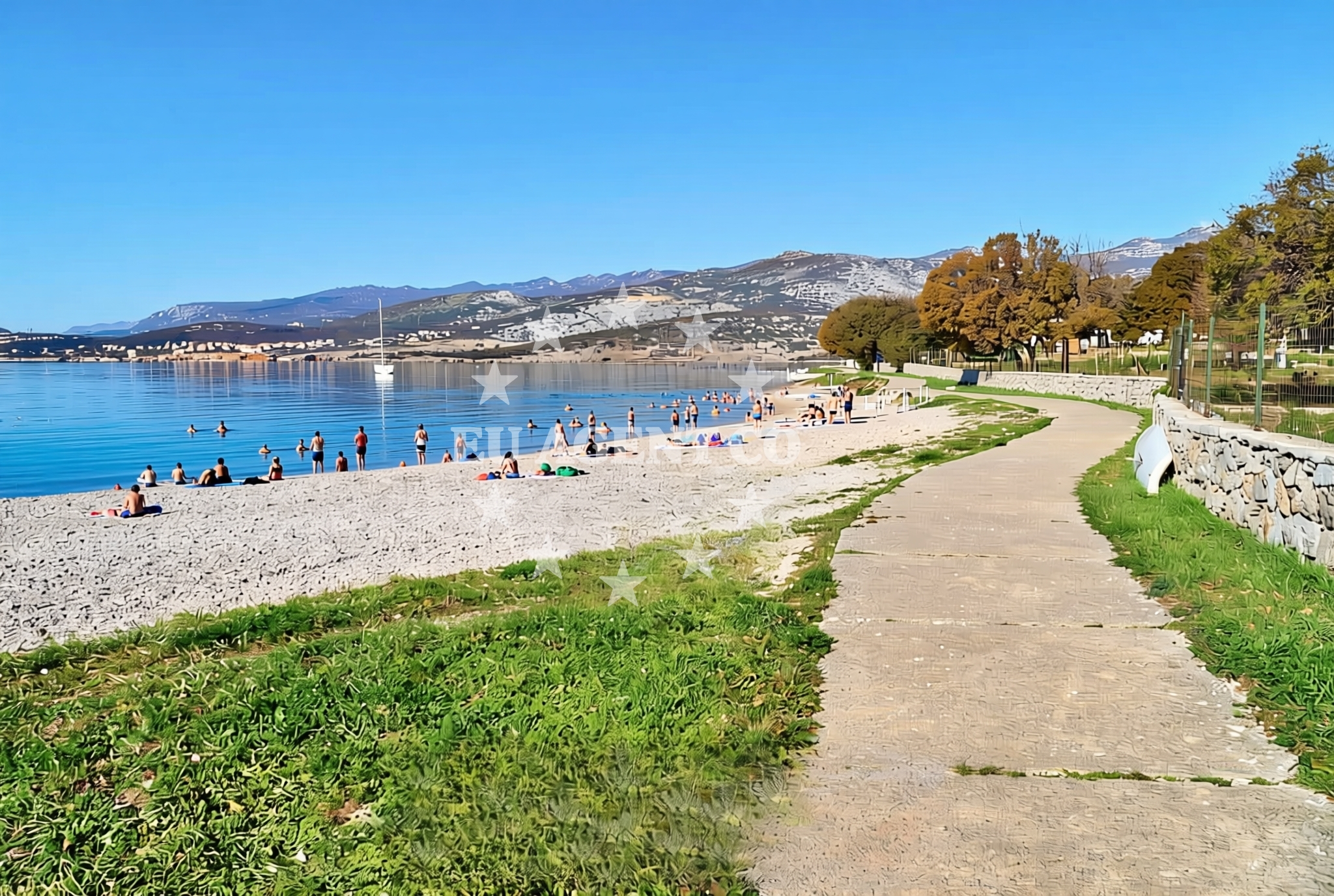
About this beach
Klenovica: beaches and coves
Beach character
The beaches of Klenovica are defined by their natural simplicity. Composed of fine gravel and pebbles, the shoreline follows the contours of the rocky coastline, with some coves offering limited sandy patches. The waters here are typically calm, protected by the natural topography of the cliffs and headlands. The region's geology creates a varied landscape, with some areas featuring steep coastal drops into the sea, while others open into broader, more accessible bays. This diversity makes Klenovica a destination for both casual visitors and those seeking more adventurous coastal experiences.Swimming and shore
Swimming conditions in Klenovica's coves are generally favorable, with water temperatures averaging between 22-26°C during the summer months. The sheltered nature of many bays provides safer swimming conditions compared to more exposed parts of the coast. Visitors should be mindful of underwater terrain, as some areas may have rocky outcrops or uneven seabeds. The shorelines are typically free of artificial structures, preserving the natural character of the coastline. In some coves, the proximity to the sea allows for easy access to the water, while other areas require a short walk along the rocky shore.Facilities and activities
Klenovica's beaches are largely undeveloped, with no formal amenities such as changing rooms, showers, or lifeguard services. This lack of infrastructure aligns with the region's focus on preserving natural landscapes. However, the nearby village of Klenovica offers basic services including local shops, restaurants, and accommodations. For more structured activities, visitors may need to travel to larger coastal towns in the area. The surrounding coastline is popular for hiking, with trails offering panoramic views of the Adriatic and opportunities to explore nearby caves and rock formations.Access and location
Reaching Klenovica's beaches requires a combination of road and coastal travel. The nearest major road network connects to the town of Split, approximately 80 kilometers to the southeast. From there, visitors can follow coastal routes that wind along the Dalmatian coast, passing through smaller villages and historic sites. For those arriving by sea, the nearby port of Split offers yacht charter services, with sailing routes that can include Klenovica's coves as part of a broader Adriatic itinerary. The area's remoteness means that access is best suited for those traveling by car or boat, with limited public transportation options.What to expect
Visitors to Klenovica's beaches should prepare for a landscape that prioritizes natural beauty over modern conveniences. The absence of formalized facilities means that the experience here is more rustic compared to commercialized coastal destinations. However, this also ensures that the area remains less crowded, offering a peaceful environment for those seeking solitude. The beaches are best suited for visitors who appreciate unspoiled coastlines and are willing to travel with a car or yacht to access the area. The surrounding region's cultural heritage, including nearby medieval towns and historic sites, provides additional context for those interested in the area's history and traditions.Practical tips
Given the lack of formal amenities, visitors should bring personal items such as towels, sunscreen, and water. The rocky terrain may make some areas challenging to navigate, so sturdy footwear is recommended. Those planning to spend extended time on the beach should consider bringing a picnic setup, as local dining options are limited to the nearby village. Due to the area's natural character, visitors are encouraged to follow local guidelines for preserving the environment, including avoiding damage to coastal vegetation and respecting wildlife.Exploring the coast by yacht
For yacht charter guests, Klenovica's coves offer a strategic base for exploring the broader Adriatic coastline. The proximity to Split and the surrounding islands creates opportunities for sailing itineraries that include historic sites, secluded anchorages, and other scenic beaches. Yacht charter companies operating from Split can facilitate access to this region, with routes that may include stops at Klenovica's coves as part of a multi-day cruise. The area's sheltered bays provide safe anchoring options, though visitors should consult local maritime charts for precise details on navigational conditions and depth profiles.Historical Context of the Region
The Klenovica area has been influenced by centuries of maritime activity, with evidence of ancient Roman settlements and medieval coastal fortifications. The nearby town of Split, a UNESCO World Heritage Site, offers a glimpse into the region's rich history through its well-preserved Diocletian's Palace and Roman ruins. This historical legacy continues to shape the character of the surrounding coastline, with many of the region's coves and inlets having been used for centuries by sailors and fishermen.Anchorages in the surrounding area
Anchorages near Klenovica include Uvala Zrnovnica and options in Senj and Krk.
- Anchorage — klenovica — 0.3 NM from beach
- Anchorage — senj — 4.9 NM from beach
- Anchorage — krk — 5.2 NM from beach
- Anchorage — selce — 5.2 NM from beach
- Anchorage — krk — 5.3 NM from beach
- Anchorage — krk — 5.3 NM from beach
- Anchorage — krk — 5.4 NM from beach
- Anchorage — senj — 5.6 NM from beach
Distances are straight-line geographic distances, not sailing routes.
Mooring buoys in the surrounding area
- mole — klenovica — 0.1 NM from beach
- Jetty — klenovica — 0.2 NM from beach
- Buoy field — povile — 1.4 NM from beach
- St. Marin — st marin — novi vinodolski — 2.3 NM from beach
- Buoy field — novi vinodolski — 2.9 NM from beach
Distances are straight-line geographic distances, not sailing routes.
Marine fuel stations
Fuel stations in Novi Vinodolski and Crikvenica serve the surrounding coastal area.
- INA — novi vinodolski — 2.8 NM from beach
- Fuel station — crikvenica — 7.7 NM from beach
- Flash — krk — 12.4 NM from beach
- Ina — krk — 12.5 NM from beach
Distances are straight-line geographic distances, not sailing routes.
Harbours in the surrounding area
- Klenovica — 0.1 NM from beach
- Novi Vinodolski — 2.9 NM from beach
- Selce — 6.3 NM from beach
- Senj — 7.0 NM from beach
- Vrbnik — krk — 7.4 NM from beach
- Crikvenica — 7.9 NM from beach
Distances are straight-line geographic distances, not sailing routes.
Marinas in the surrounding area
Marinas in Novi Vinodolski, including Mitana Marina, are located close to Klenovica.
- Mitan Marina — novi vinodolski — 2.0 NM from beach
- Marina Novi — novi vinodolski — 2.9 NM from beach
- Šilo — silo — krk — 8.0 NM from beach
- Marina Punat — krk — 10.2 NM from beach
- Omišalj Docks — omisalj — krk — 14.0 NM from beach
Distances are straight-line geographic distances, not sailing routes.
Restaurants near the beach
Restaurants in Klenovica and Novi Vinodolski offer dining near the beach.
- Restaurant — klenovica — 0.1 NM from beach
- Restaurant — klenovica — 0.2 NM from beach
- Restaurant — povile — 1.3 NM from beach
- Bistro & Caffe Bar Marina — bistro and caffe bar marina — novi vinodolski — 2.8 NM from beach
- Restaurant Admiral — novi vinodolski — 2.9 NM from beach
Distances are straight-line geographic distances, not sailing routes.
Navigation guides for the surrounding area
Navigation guides for Klenovica, Uvala Zrnovnica, and Povile assist with local sailing routes.
- Klenovica — 0.2 NM from beach
- Uvala Zrnovnica — 0.5 NM from beach
- Povile — 1.2 NM from beach
- Luka Novi (Novi Vinodolski) — 2.5 NM from beach
- Uvala Jasenova — 5.0 NM from beach
Distances are straight-line geographic distances, not sailing routes.
Yachts from nearby departure bases
Yachts departing from Vinodolski Novi Mitan Marina and nearby bases operate in the region.
Sailing yachts
- Bavaria C38 (Valhalla) — Vinodolski Novi Marina — 2.9 NM from departure base to beach
- Elan 40 Impression (AVISA) — Vinodolski Novi Marina — 2.9 NM from departure base to beach
- Oceanis 50 (Elise) — Vinodolski Novi Marina — 2.9 NM from departure base to beach
- Elan 494 Impression (LUCIJA I) — Vinodolski Novi Marina — 2.9 NM from departure base to beach
Catamarans
- Excess 12 (Kiss Me Twice) — Vinodolski Novi Marina — 2.9 NM from departure base to beach
- Bali 5.4 (Joza) — Vinodolski Novi Marina — 2.9 NM from departure base to beach
- Aventura 37 (THOMAS) — Vinodolski Novi Marina — 2.9 NM from departure base to beach
- Lagoon 40 (Paco) — Vinodolski Novi Marina — 2.9 NM from departure base to beach
Motor yachts
- Galeon 700 (Obsession two) — Vinodolski Novi Mitan Marina — 2.0 NM from departure base to beach
Motor boats
- Adriana 36 (Gaja) — Vinodolski Novi Marina — 2.9 NM from departure base to beach
Distances are straight-line geographic distances, not sailing routes.