Hrboki: Beaches and Coves, Croatia
6 photos
About this beach
Hrboki: beaches and coves
Beach character
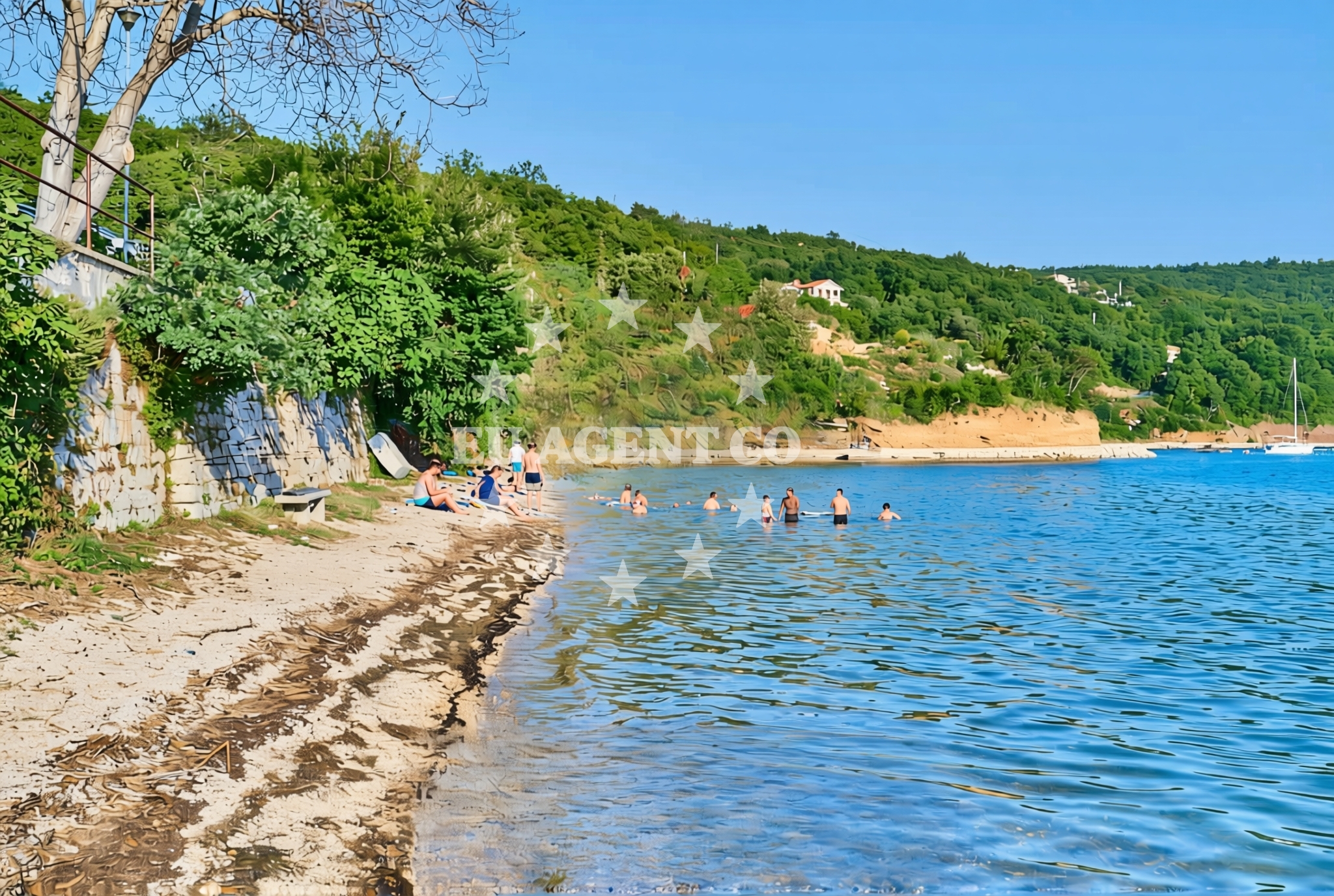
The beaches and coves of Hrboki are defined by their integration with the surrounding terrain. The coastline here is marked by a mix of rocky outcrops and narrow sandy stretches, many of which are accessible only by foot or boat. The area's proximity to the Dalmatian hinterland means that the beach environment is often framed by terraced vineyards and olive groves, creating a striking contrast between land and sea. While no specific facilities are listed for individual beaches, the broader region's coastal character suggests a focus on natural immersion rather than structured amenities.Swimming and shore
Swimming conditions in the Hrboki area are influenced by the region's typical Adriatic climate. The waters, which are generally clear and cool, can be more temperate than the warmer southern Adriatic coasts. The shoreline's rocky nature means that swimming is often best suited to calmer coves rather than open stretches. Visitors should be mindful of tidal patterns and potential undercurrents near cliff faces, as these can create unpredictable conditions for swimmers.Facilities and activities
Facilities along the Hrboki coastline are sparse, reflecting the area's emphasis on natural preservation. There are no explicitly documented amenities such as showers, changing rooms, or lifeguard services. However, the region's appeal lies in its accessibility for low-impact activities. Snorkeling, kayaking, and hiking along the coastal trails are common pursuits. The nearby village of Hrboki itself offers basic accommodations and dining options, serving as a logistical hub for exploring the coastline.Access and location
Access to Hrboki's beaches is primarily via a network of coastal roads and footpaths that connect the village to the shoreline. The nearest major town, Split, is approximately 35 kilometers to the east, providing access to regional transportation hubs and services. The coastal road from Split to Hrboki follows the Adriatic coastline, offering scenic views of the surrounding islands and sea. For those arriving by sea, the nearby marina in Split (Split Marina) serves as a key departure point for boats exploring the area, with sailing routes extending to nearby islands such as Brač and Hvar.What to expect
Visitors to Hrboki's beaches should expect a landscape shaped by natural elements rather than structured tourism infrastructure. The coastline is best explored on foot, with trails leading from the village to various coves and inlets. The area's appeal lies in its raw, unspoiled character, making it ideal for those seeking solitude and connection with the Adriatic's natural rhythms. While facilities are limited, the proximity to Split ensures access to essential services, restaurants, and cultural attractions.Practical tips
When visiting Hrboki's beaches, consider bringing water and snacks for extended stays, as amenities are minimal. Parking in the village is limited, so arriving early is advisable. For those planning to explore by sea, pre-arranging boat access from Split Marina is recommended, as the coastal roads can become congested during peak season.Exploring the coast by yacht
For yacht charter guests, the Hrboki coastline offers a strategic vantage point for exploring the central Dalmatian coast. The nearby Split Marina provides a base for sailing excursions to the islands of Brač, Hvar, and Šolta, with routes passing through the scenic channels of the Adriatic. The area's sheltered bays and calm waters make it suitable for both motor yachts and sailing vessels, though anchoring should be done with care to avoid sensitive ecological zones. Charter companies operating from Split often include Hrboki in itineraries focused on the region's lesser-known coastal gems.Historical Context of the Hrboki Coast
The Hrboki coastline has historically been a quiet, agrarian region, with its economy tied to vineyard cultivation and fishing. The area's limited development has preserved its medieval character, with remnants of old stone pathways and traditional farmhouses still visible along the coast. This historical continuity contributes to the region's distinctiveness compared to more touristed parts of the Adriatic.Anchorages in the surrounding area
- Anchorage — trget — 1.6 NM from beach
- Anchorage — krnica — 4.6 NM from beach
- Anchorage — koromacno — 4.7 NM from beach
- Anchorage — koromacno — 4.7 NM from beach
- Anchorage — duga luka — 5.6 NM from beach
- Anchorage — rakalj — 5.7 NM from beach
- Anchorage — sveta marina — 5.8 NM from beach
- Remac — rabac — 6.1 NM from beach
Distances are straight-line geographic distances, not sailing routes.
Mooring buoys in the surrounding area
- Jetty — trget — 1.6 NM from beach
- Quay — koromacno — 4.7 NM from beach
- Quay — koromacno — 4.7 NM from beach
- Jetty — pula — 11.4 NM from beach
- Jetty — pula — 11.5 NM from beach
Distances are straight-line geographic distances, not sailing routes.
Marine fuel stations
- Ina — pula — 11.8 NM from beach
- Fuel station — medulin — 13.0 NM from beach
- Flash — pula — 13.6 NM from beach
- Ina — rovinj — 16.7 NM from beach
Distances are straight-line geographic distances, not sailing routes.
Harbours in the surrounding area
- Trget — 1.6 NM from beach
- Krnica harbour — 4.5 NM from beach
- Rabac Luka — 6.6 NM from beach
- Budava harbour — kavran — 7.8 NM from beach
- Fažana — fazana — 11.1 NM from beach
- Brestova — 11.1 NM from beach
Distances are straight-line geographic distances, not sailing routes.
Marinas in the surrounding area
- ACI Marina Pula — 11.9 NM from beach
- Marina Polesana — pula — 12.3 NM from beach
- ACI Marina Pomer — 13.3 NM from beach
- Marina Medulin — 13.4 NM from beach
- Marina Veruda — pula — 13.4 NM from beach
Distances are straight-line geographic distances, not sailing routes.
Restaurants near the beach
- Konoba Nando — trget — 1.6 NM from beach
- Restaurant — rakalj — 3.5 NM from beach
- K Ribaru — krnica — 4.5 NM from beach
- Restaurant — koromacno — 4.8 NM from beach
Distances are straight-line geographic distances, not sailing routes.
Navigation guides for the surrounding area
- ZALJEV RASA — 5.3 NM from beach
- Uvala Prklog — 5.8 NM from beach
- Luka Budava — 8.3 NM from beach
- Medulin and Pomer — 13.2 NM from beach
Distances are straight-line geographic distances, not sailing routes.
Yachts from nearby departure bases
Yachts from Pula Trget Port provide departure options for exploring Hrboki's beaches.
Sailing yachts
- First 35 (PSYCHE) — Pula Trget Port — 1.6 NM from departure base to beach
- Bavaria 39 Cruiser (Marja) — Pula Trget Port — 1.6 NM from departure base to beach
- Dufour 44 (Victoria 1) — Pula Trget Port — 1.6 NM from departure base to beach
- Bavaria Cruiser 37 (Alani) — Pula Trget Port — 1.6 NM from departure base to beach
- Bavaria 37 Cruiser (ALANI) — Pula Trget Port — 1.6 NM from departure base to beach
- Elan 333 (Brina) — Rabac Port — 6.6 NM from departure base to beach
- Bavaria 30 Cruiser (Ana) — Rabac Port — 6.6 NM from departure base to beach
- Elan Impression 40 (Silente) — Rabac Port — 6.6 NM from departure base to beach
Motor boats
- Damor 980 Fjera (St.Marina) — Pula Trget Port — 1.6 NM from departure base to beach
- Orizzonti Andromeda II — Pula Fažana — 11.3 NM from departure base to beach
Distances are straight-line geographic distances, not sailing routes.
Frequently asked questions
Are there any protected areas or restrictions on beach access in Hrboki?
While specific regulations are not documented for individual beaches, the broader region's natural preservation efforts suggest that visitors should respect local environmental guidelines. Anchoring and beach use should be conducted with care to avoid disturbing sensitive coastal ecosystems.What is the best way to reach Hrboki's beaches from Split?
The most direct route is via the coastal road from Split to Hrboki, which takes approximately 45 minutes by car. Alternatively, boat tours departing from Split Marina can provide access to the area's coves, though these are typically organized through local charter services.Nearby beaches
Rebići: beaches and coves
Rebići
1.4 km
Trget: beaches and coves (3)
Trget
2.9 km
Lučica, Trget Beach
Lučica
3.1 km
Belavići (Marčana): beaches and coves
Belavići (Marčana)
3.2 km
Get beach
3.3 km
Rupa, Trget Beach
Rupa
3.4 km
Biljina, Trgetari Beach
Biljina
3.5 km
Trgetari: beaches and coves (1)
Trgetari
4.0 km