Havajsko (Procipina), Pula Beach, Croatia
Havajsko (Procipina) Beach is a short, gravelly shoreline located in Pula, a historic coastal town on the Istrian Peninsula in Croatia. Situated along the northern Adriatic, this beach offers a quiet stretch of coastline near the town's well-preserved Roman amphitheater and modern amenities. While its 35-meter length is modest, the beach provides a direct connection to Pula's broader coastal landscape, where rocky shores and pebble beaches are common features.
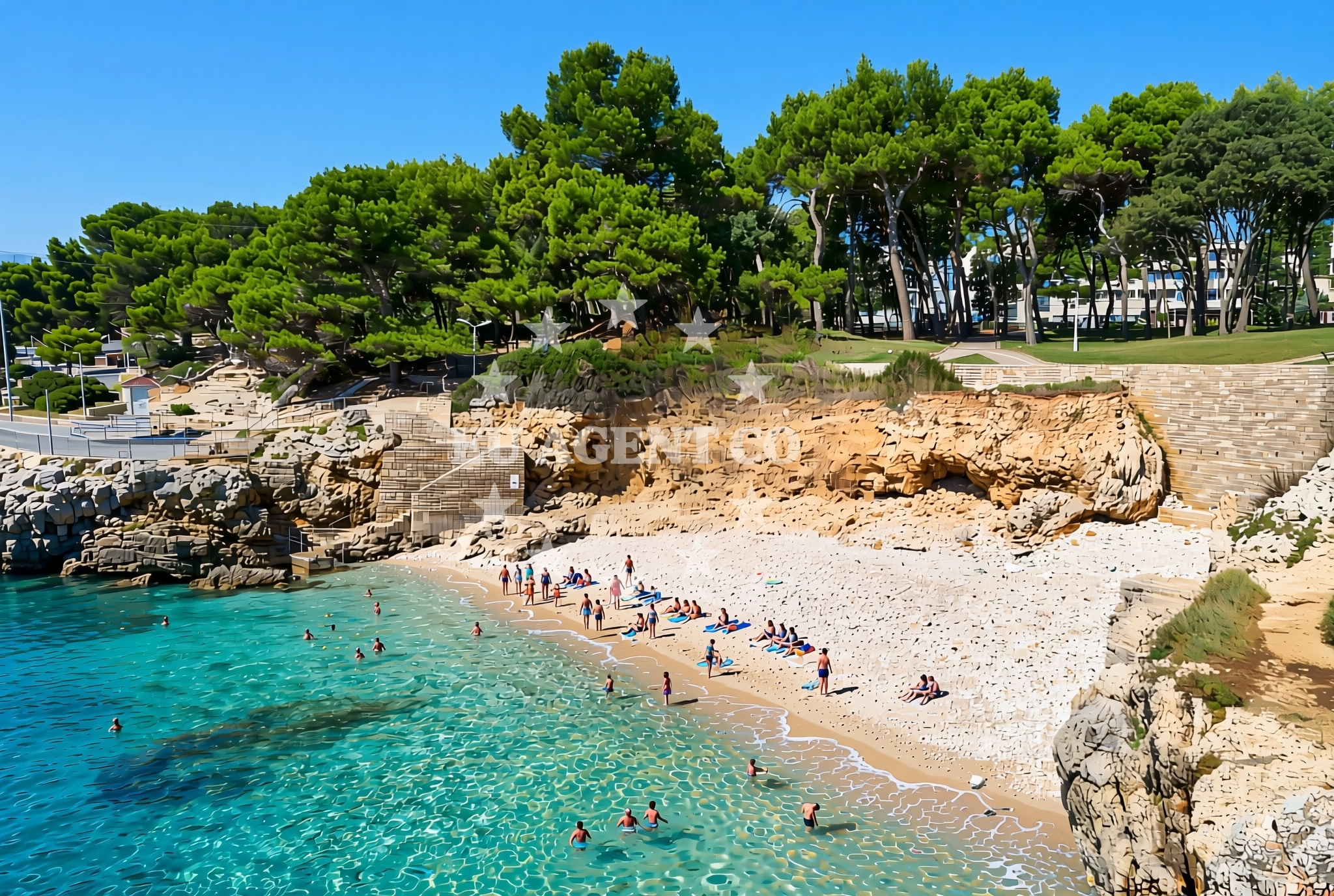
About this beach
Havajsko (Procipina), Pula
Beach: Havajsko (Procipina)
Location: Pula
Characteristics and facilities
Gravel
35 m
Beach character
The beach consists of gravel, a characteristic shoreline type along much of the Istrian coast. Its compact size makes it a local spot rather than a major tourist destination, though it benefits from Pula's infrastructure. The gravel composition may appeal to visitors seeking a more natural, less developed beach experience. The area's proximity to Pula's urban center means access to dining, shopping, and cultural sites is within walking distance for those who prefer a base in the town.
Swimming and shore
Swimming conditions here are dictated by the Adriatic's general patterns, with summer temperatures typically warm enough for comfortable bathing. The gravel substrate may make wading less ideal for young children, though the beach's short length means it's not a primary destination for water sports. The nearby Gulf of Pula, known for its calm waters, offers alternative sailing and snorkeling opportunities within a short drive or boat ride.
Facilities and activities
No specific facilities are listed for the beach itself, reflecting its modest scale. However, Pula's town center provides a range of services, including hotels, restaurants, and retail options. The beach's immediate surroundings are likely undeveloped, focusing on natural access rather than structured amenities. Activities here are limited to casual shoreline walking or sunbathing, with no explicit mention of rentals, showers, or seating.
Access and location
Located in Pula, the beach is accessible via the town's road network. As part of the Istrian Peninsula, it lies within a region known for its scenic coastal routes and historic sites. The nearest major transportation hubs include Pula Airport and the A1 motorway connecting Zagreb to Rijeka. Visitors arriving by yacht may find docking options in Pula's marinas, which serve as a gateway to the Gulf of Pula and surrounding Adriatic waters.
What to expect
Expect a short, gravelly beach with limited amenities, ideal for those seeking a quiet coastal spot near Pula. The beach's proximity to the town means access to Pula's cultural and recreational offerings is straightforward. While not a major tourist attraction itself, it reflects the natural shoreline characteristics of the Istrian coast, where pebble and gravel beaches are common. The area is best suited for visitors prioritizing convenience over extensive beach facilities.
Practical tips
Given the gravel composition, consider wearing sturdy footwear for comfort. While no specific beach amenities are listed, Pula's town center offers nearby dining and shopping. For extended stays, book accommodation in Pula to combine beach visits with access to the town's attractions.
Exploring the coast by yacht
Pula's marinas and yacht charter services provide a convenient starting point for exploring the Adriatic. The Gulf of Pula, with its sheltered waters, is a popular sailing area, and nearby islands like Cres and Lošinj offer additional destinations. Yacht owners and charter guests can use Pula as a base to navigate the Istrian coast, with opportunities to anchor in nearby bays or visit the historic town of Rovinj. For availability and bookings, visit the Yacht Search page.
Historical Context of Pula
Pula's Roman amphitheater, a UNESCO World Heritage Site, is one of the best-preserved ancient structures in the region. The town's history as a Roman colony influences its architecture and cultural identity, making it a unique destination for those interested in antiquity. This historical context adds depth to any visit, whether exploring the town or using it as a base for coastal excursions.
Anchorages in the surrounding area
Anchorages in Banjole and Pula offer nearby mooring options.
- Anchorage — banjole — 1.0 NM from beach
- Anchorage — banjole — 1.2 NM from beach
- Anchorage — pula — 1.5 NM from beach
- Anchorage — pula — 1.7 NM from beach
- Anchorage — banjole — 1.8 NM from beach
- Anchorage — banjole — 2.6 NM from beach
- Anchorage — pula — 2.6 NM from beach
- Anchorage — pula — 3.5 NM from beach
Distances are straight-line geographic distances, not sailing routes.
Mooring buoys in the surrounding area
- Jetty — pula — 0.6 NM from beach
- Buoy field — banjole — 1.2 NM from beach
- Jetty — vinkuran — 1.3 NM from beach
- Quay — pula — 1.9 NM from beach
- Jetty — pula — 1.9 NM from beach
Distances are straight-line geographic distances, not sailing routes.
Marine fuel stations
- Flash — pula — 0.6 NM from beach
- Ina — pula — 2.4 NM from beach
- Fuel station — medulin — 4.4 NM from beach
- Ina — rovinj — 17.1 NM from beach
Distances are straight-line geographic distances, not sailing routes.
Harbours in the surrounding area
Harbors in Pula and Banjole are located in the surrounding area.
- Bunarina — pula — 0.4 NM from beach
- Sportska lučica Delfin — sportska lucica delfin — pula — 0.8 NM from beach
- Banjole — 1.8 NM from beach
- Pomer — 3.3 NM from beach
- Salbuni — pula — 3.9 NM from beach
- Runke — premantura — 4.0 NM from beach
Distances are straight-line geographic distances, not sailing routes.
Marinas in the surrounding area
Marinas in Pula, including Marina Bunarina and Marina Veruda, are situated nearby.
- Marina Bunarina — pula — 0.4 NM from beach
- Marina Veruda — pula — 0.7 NM from beach
- ACI Marina Pula — 2.4 NM from beach
- Marina Polesana — pula — 2.5 NM from beach
- ACI Marina Pomer — 3.2 NM from beach
Distances are straight-line geographic distances, not sailing routes.
Restaurants near the beach
Restaurants in Pula, such as Ribarska Koliba and Restaurant Skuza, are close to the beach.
- Restaurant — pula — 0.4 NM from beach
- Ribarska Koliba — pula — 0.5 NM from beach
- Restaurant Skuza — pula — 0.7 NM from beach
- Restaurant Villa Margerita — pula — 0.7 NM from beach
- Volaria — pula — 0.8 NM from beach
- Restaurant — banjole — 0.9 NM from beach
- Restaurant Oasi — pula — 0.9 NM from beach
Distances are straight-line geographic distances, not sailing routes.
Navigation guides for the surrounding area
- Medulin and Pomer — 4.5 NM from beach
- Luka Budava — 7.9 NM from beach
- ZALJEV RASA — 12.6 NM from beach
Distances are straight-line geographic distances, not sailing routes.
Yachts from nearby departure bases
Yachts departing from Pula Tehnomont Marina Veruda offer sail and motor boat options nearby.
Sailing yachts
- Sun Odyssey 36i (Ma Bajukana) — Pula Tehnomont Marina Veruda — 0.7 NM from departure base to beach
- Oceanis 40.1 (Imisalj) — Pula Tehnomont Marina Veruda — 0.7 NM from departure base to beach
- Oceanis 37.1 (Agios) — Pula Tehnomont Marina Veruda — 0.7 NM from departure base to beach
Catamarans
- Lipari 41 (Marisol) — Pula Tehnomont Marina Veruda — 0.7 NM from departure base to beach
- Bali 4.1 (Primosten) — Pula Tehnomont Marina Veruda — 0.7 NM from departure base to beach
- Excess 14 (Lydia III) — Pula Tehnomont Marina Veruda — 0.7 NM from departure base to beach
Motor yachts
- Sealine F430 (Blue Lagoon II ) — Pula Tehnomont Marina Veruda — 0.7 NM from departure base to beach
- Sealine F430 (BLUE LAGOON) — Pula Tehnomont Marina Veruda — 0.7 NM from departure base to beach
Motor boats
- Sealine C330 (FLOW ) — Pula Tehnomont Marina Veruda — 0.7 NM from departure base to beach
- Cap Camarat 6.5 CC series 3 — Pula Tehnomont Marina Veruda — 0.7 NM from departure base to beach
Distances are straight-line geographic distances, not sailing routes.