Drače Beaches and Coves: Explore Croatia's Adriatic Coast
Drače, a quiet coastal village on Croatia’s Adriatic coast, is home to a series of beaches and coves that offer a glimpse into the region’s rugged natural beauty. Nestled along a stretch of coastline known for its dramatic cliffs and clear waters, Drače’s shores are part of a broader landscape that has long attracted sailors, divers, and nature enthusiasts. While the village itself remains relatively low-key, its proximity to larger maritime hubs and cultural landmarks makes it a useful waypoint for those exploring the eastern Adriatic.
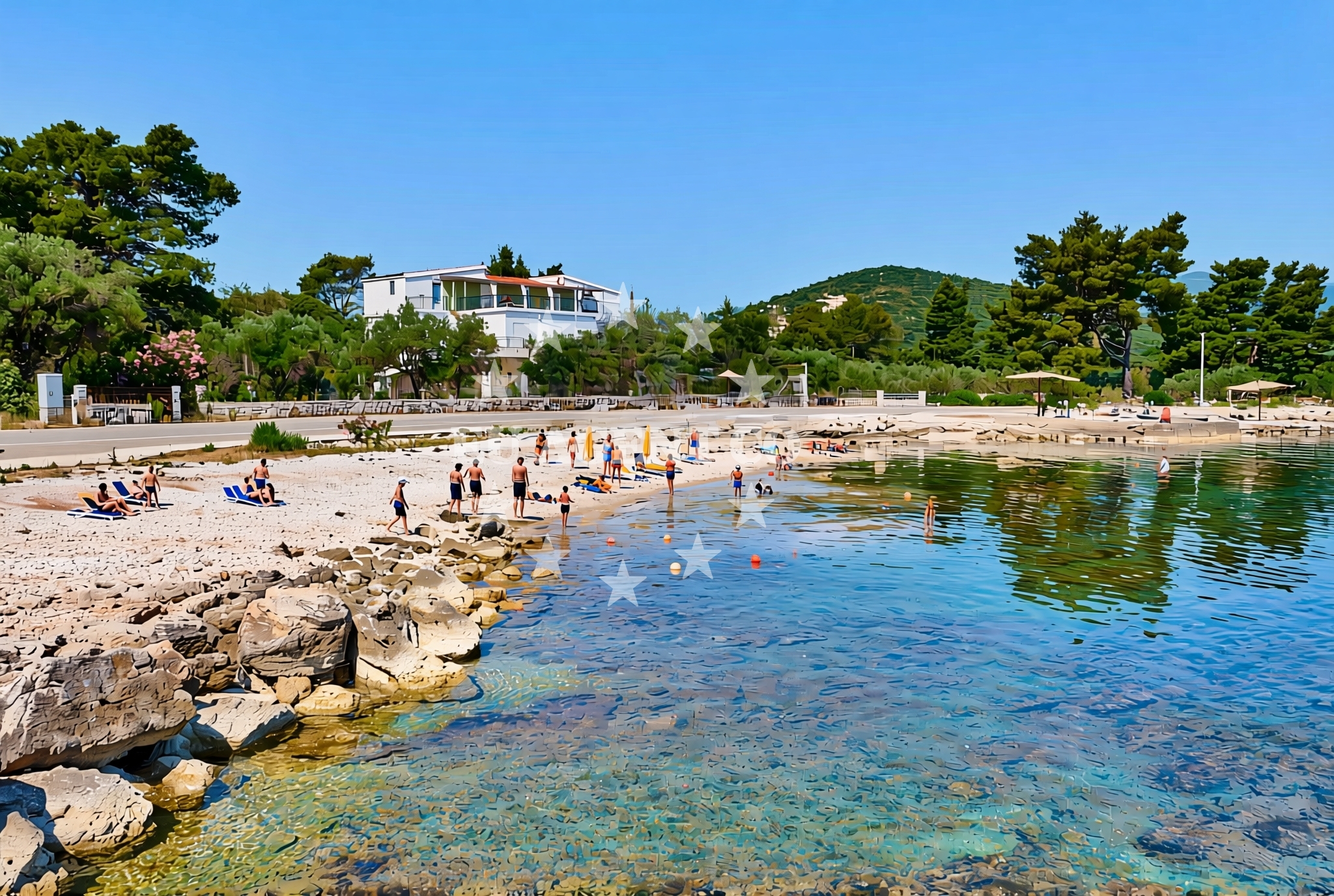
About this beach
Drače: beaches and coves
Beach character
The beaches and coves of Drače are defined by their natural contours, with rocky outcrops and shallow inlets creating a varied shoreline. The area’s geology, shaped by millennia of erosion, results in a coastline that alternates between pebbly shores and small sandy patches. These features make the beaches particularly appealing for those seeking solitude, as the landscape’s complexity limits large-scale development. The waters surrounding Drače are typically calm, though conditions can shift with the wind, making it a spot that demands respect from swimmers and boaters alike.
Swimming and shore
Swimming in Drače’s coves is generally feasible during the summer months, though the rocky terrain means that access to the water can be uneven. Some areas offer easier entry points, while others require careful navigation around boulders. The shallows near the shore are ideal for snorkeling, with occasional visibility of marine life such as sea urchins and small fish. The absence of artificial structures means that the shoreline remains largely untouched, preserving the area’s natural character.
Facilities and activities
There are no formal facilities directly on Drače’s beaches, reflecting the region’s focus on preserving its natural state. However, the nearby village of Drače provides basic amenities such as small shops, cafes, and accommodations for visitors. For more extensive services, travelers may need to head to larger towns like Šibenik or Split, which are within a short drive or boat ride. The area’s appeal lies in its simplicity—ideal for those seeking a retreat from crowded tourist spots.
Access and location
Reaching Drače involves a combination of road and maritime routes. The village is served by a minor road that connects to the main coastal highway, making it accessible by car. For those arriving by sea, the nearest major marinas are in Šibenik and Split, both of which are well-equipped for yachts and motorboats. The Adriatic’s navigable waters mean that Drače’s coves can be reached via short sailing trips, though boaters should be mindful of local currents and weather patterns.
What to expect
Visitors to Drače’s beaches should expect a landscape that prioritizes natural beauty over convenience. The lack of infrastructure means that the area is best suited for those who value seclusion and self-sufficiency. The beaches are not marked by lifeguards or emergency services, so caution is advised, particularly for families with young children. The region’s charm lies in its authenticity—offering a stark contrast to the more commercialized coastal areas of Croatia.
Practical tips
When planning a visit, consider the tides and weather forecasts, as conditions can change rapidly along the Adriatic coast. Bring sturdy footwear for navigating rocky shorelines, and pack water for hikes along the cliffs. Local guides may offer insights into the area’s history and ecology, though these services are not widely advertised. For those arriving by boat, anchoring near Drače requires careful attention to depth charts and local maritime regulations.
Exploring the coast by yacht
The waters around Drače are part of a larger sailing region that extends from the Bay of Kotor to the islands of Hvar and Brač. This area is a popular route for charter yachts, with its mix of sheltered bays and open sea offering diverse sailing experiences. While Drače itself is not a major marina destination, its proximity to Šibenik and Split—both of which have extensive yacht facilities—makes it a useful stop for those exploring the eastern Adriatic. Sailors should note that the region’s coastal routes are best navigated during the spring and autumn months, when winds are more predictable.
Cultural Context of Drače
The village of Drače has a long history tied to the Adriatic’s maritime traditions. Local legends speak of ancient Roman trade routes that once passed through the area, though archaeological evidence remains limited. The region’s cultural identity is closely linked to Šibenik, a nearby town known for its medieval architecture and UNESCO-listed landmarks. Visitors may find it worthwhile to explore Šibenik’s historic sites, such as the St. Nicholas Fortress and the Cathedral of St. Domnius, which offer a glimpse into the area’s layered history.
Fishing and Local Economy
Fishing remains an important part of the local economy in Drače, with traditional methods still practiced by some residents. The surrounding waters are known for species such as sea bass and octopus, though commercial fishing is limited due to environmental protections. For visitors interested in seafood, nearby towns offer fresh catches prepared in local restaurants, though Drače itself lacks dining options beyond small family-run taverns.
Anchorages in the surrounding area
Anchorages in Trstenik, Zuljana, and nearby areas offer convenient stopping points near Drače's beaches and coves.
- Anchorage — trstenik — 1.9 NM from beach
- Anchorage — trstenik — 2.0 NM from beach
- Anchorage — trstenik — 2.3 NM from beach
- Anchorage — zuljana — 2.3 NM from beach
- Anchorage — zuljana — 2.6 NM from beach
- Anchorage — duba — 3.5 NM from beach
- Anchorage — brijesta — 3.8 NM from beach
- Anchorage — crikvice — 4.2 NM from beach
Distances are straight-line geographic distances, not sailing routes.
Mooring buoys in the surrounding area
- Brijesta — 3.9 NM from beach
- Jetty — blace — 4.6 NM from beach
- Buoy — mljet — 8.8 NM from beach
- Restaurant Dalmatinac quay — mljet — 8.8 NM from beach
- Konoba Joseph dock — polace — mljet — 9.0 NM from beach
Distances are straight-line geographic distances, not sailing routes.
Marine fuel stations
Fuel stations in Ploce and Korcula provide refueling options for vessels traveling to Drače's beaches and coves.
- Fuel station — ploce — 7.4 NM from beach
- Fuel station — korcula — 13.3 NM from beach
- Fuel station — sobra — mljet — 13.8 NM from beach
- Ina — makarska — 29.0 NM from beach
Distances are straight-line geographic distances, not sailing routes.
Harbours in the surrounding area
The nearby Drače harbor offers direct access to the beaches and coves of Drače.
- Drače — drace — 0.1 NM from beach
- Sresar — rat — 1.1 NM from beach
- Trstenik — 2.3 NM from beach
- Žuljana — zuljana — 2.3 NM from beach
- Opuzen — 7.4 NM from beach
- Ploče — ploce — 7.5 NM from beach
Distances are straight-line geographic distances, not sailing routes.
Marinas in the surrounding area
- Marina Lumbarda — korcula — 12.1 NM from beach
- ACI Marina Korčula — korcula — 13.8 NM from beach
- ACI Marina Slano — 21.3 NM from beach
- Marina Tučepi — marina tucepi — 26.4 NM from beach
- Marina Solitudo — lastovo — 29.2 NM from beach
Distances are straight-line geographic distances, not sailing routes.
Restaurants near the beach
Restaurants in Zuljana provide dining options close to Drače's beaches and coves.
- Bistro Ankora — zuljana — 2.3 NM from beach
- Konoba Riva — zuljana — 2.4 NM from beach
Distances are straight-line geographic distances, not sailing routes.
Navigation guides for the surrounding area
Navigation guides for Trstenik and surrounding areas assist in planning routes to Drače's beaches and coves.
- Trstenik — 2.1 NM from beach
- Bl ace — 4.5 NM from beach
- Uvala Kljemtine — 5.0 NM from beach
- Uvala Klek — 5.2 NM from beach
- Uvala Lopata — 5.5 NM from beach
Distances are straight-line geographic distances, not sailing routes.
Yachts from nearby departure bases
Sailing yachts
- Elan 40 Impression (Karleta) — Ploče City Port — 7.4 NM from departure base to beach
- Sun Odyssey 419 (Luka Ploce) — Ploče City Port — 7.4 NM from departure base to beach
- More 55 (MRS. ROBINSON) — Ploče City Port — 7.4 NM from departure base to beach
- Sun Odyssey 349 (Porto Tolero) — Ploče City Port — 7.4 NM from departure base to beach
- Elan 514 Impression (Cesarica III) — Ploče City Port — 7.4 NM from departure base to beach
- Salona 44 (SAMOA) — Ploče City Port — 7.4 NM from departure base to beach
- Sun Odyssey 349 (Visnjica) — Ploče City Port — 7.4 NM from departure base to beach
- Oceanis 45 (Soul) — Slano ACI Marina — 21.3 NM from departure base to beach
Catamarans
- Lagoon 450 Fly (Alba Mouse) — Ploče City Port — 7.4 NM from departure base to beach
- Lagoon 42 (MALA KATE I) — Slano ACI Marina — 21.3 NM from departure base to beach
Distances are straight-line geographic distances, not sailing routes.