Babe jug, Novalja (Pag) Beach, Croatia
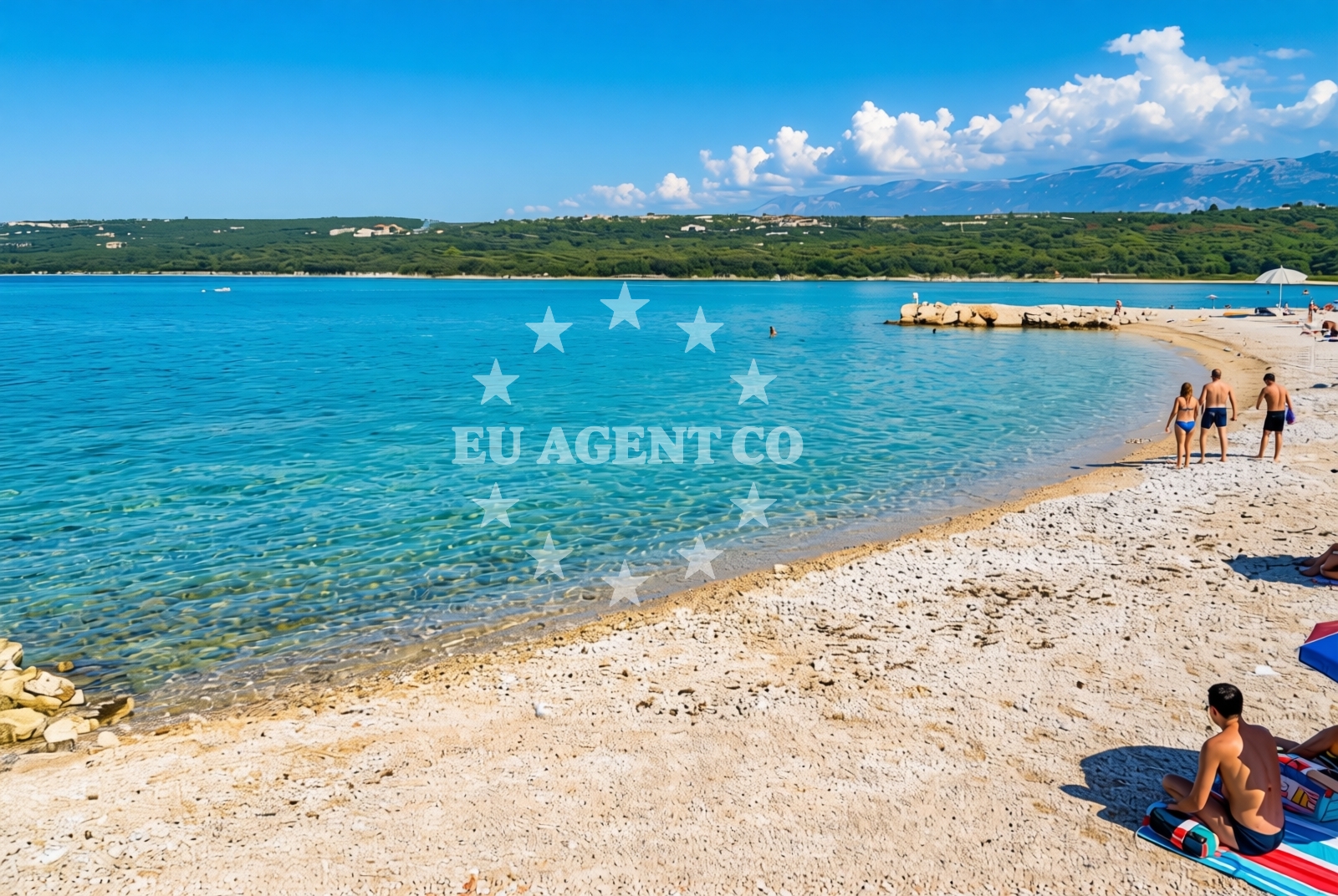
Babe jug Beach lies on the eastern coast of Pag, a windswept island in Croatia's Dalmatian Adriatic. This stretch of pebbles and gravel extends for 320 meters, offering a stark contrast to the island's more famous white-sand beaches. Its proximity to Novalja, Pag's main town, makes it a convenient stop for visitors exploring the island's unique geography and cultural heritage.
About this beach
Babe jug, Novalja (Pag)
Beach: Babe jug
Location: Novalja (Pag)
Characteristics and facilities
Pebbles, gravel
320 m
Restaurant / snack bar
Caffe bar / Drinks stand
Beach character
The beach's composition of pebbles and gravel defines its character, creating a rugged shoreline that contrasts with the soft sands of Pag's western coast. While the lack of fine sand may deter some visitors, the beach's natural features provide a distinctive setting for those seeking a more authentic coastal experience. The shallow, sheltered waters near the shore are ideal for casual swimming, though the rocky terrain may require careful navigation.
Swimming and shore
Swimming conditions at Babe jug are generally calm, with the beach's orientation offering some protection from the open sea. The pebbly shore allows for easy access to the water, though visitors should be mindful of the uneven terrain. The beach's proximity to Novalja means it benefits from the town's infrastructure, including nearby parking and access roads.
Facilities and activities
On-site facilities include a restaurant and snack bar, as well as a caffe bar for drinks. These options cater to visitors seeking refreshments without leaving the beach area. While the beach itself does not host organized activities, its location on Pag provides opportunities for exploring the island's landmarks, such as the ancient Roman ruins of Imota and the fortified town of Novalja.
Access and location
Reaching Babe jug Beach involves a short drive from Novalja, Pag's primary settlement. The beach is accessible via local roads that wind through the island's interior, offering scenic views of Pag's characteristic karst landscape. Its position on the island's eastern coast places it within easy reach of other Adriatic destinations, including the nearby islands of Hvar and Brac.
What to expect
Expect a rugged, pebble-strewn shoreline that contrasts with Pag's more famous sandy beaches. The beach's facilities include a restaurant, snack bar, and caffe bar, making it a practical choice for visitors seeking meals and drinks near the shore. The beach's orientation offers sheltered waters for swimming, though the rocky terrain may require careful navigation. Its location near Novalja provides access to the island's cultural and historical sites, including the Roman ruins of Imota and the medieval fortress of Novalja.
Practical tips
Bring sturdy footwear for the pebbly terrain, and consider using a towel to protect against the gravel. The on-site dining options are ideal for casual meals, but arrive early to secure a spot at the caffe bar. The beach's proximity to Novalja means it's well-connected to the island's other attractions, though visitors should check local transportation schedules for the best access.
Exploring the coast by yacht
For yacht charter guests, Babe jug Beach offers a strategic vantage point along Pag's eastern coast. The Adriatic's clear waters and gentle currents make this region ideal for sailing, with routes extending to nearby islands like Hvar and Brac. Euro-Agent's yacht charter services can facilitate explorations of Pag's coastline, including stops at other beaches and historical sites. The beach's location also provides easy access to the mainland, with ferry connections to the mainland town of Zadar.
Historical Context of Pag
Pag's history dates back to ancient times, with evidence of Roman settlements and medieval fortifications. The island's unique geography, shaped by the Adriatic Sea, has influenced its development as a hub for fishing, salt production, and tourism. Babe jug Beach, while less developed than other parts of the island, reflects Pag's enduring connection to the sea and its role in the region's maritime traditions.
Anchorages in the surrounding area
- Anchorage — novalja — pag — 0.1 NM from beach
- Anchorage — novalja — pag — 0.7 NM from beach
- Anchorage — stara novalja — pag — 1.1 NM from beach
- Anchorage — skunca — pag — 1.2 NM from beach
- Straško — novalja — pag — 1.6 NM from beach
- Anchorage — dabova — pag — 2.2 NM from beach
- Anchorage — novalja — pag — 2.7 NM from beach
- Anchorage — pag — 2.9 NM from beach
Distances are straight-line geographic distances, not sailing routes.
Mooring buoys in the surrounding area
- Buoy field — novalja — pag — 0.7 NM from beach
- Drljanda — stara novalja — pag — 2.2 NM from beach
- Jetty — zubovici — pag — 5.5 NM from beach
- Jetty — jakisnica — pag — 5.6 NM from beach
- Jetty — zubovici — pag — 5.7 NM from beach
Distances are straight-line geographic distances, not sailing routes.
Marine fuel stations
- Ina — rab — 12.3 NM from beach
- Ina — mali losinj — 17.3 NM from beach
- Adria Oil — mali losinj — 17.5 NM from beach
- Tifon — nerezine — losinj — 20.9 NM from beach
Distances are straight-line geographic distances, not sailing routes.
Harbours in the surrounding area
- Novalja — pag — 0.8 NM from beach
- Stara Novalja — pag — 1.9 NM from beach
- Žigljen — zigljen — pag — 3.7 NM from beach
- Prizna — 5.0 NM from beach
- Jakišnica — jakisnica — pag — 5.9 NM from beach
- Mišnjak — misnjak — rab — 8.3 NM from beach
Distances are straight-line geographic distances, not sailing routes.
Marinas in the surrounding area
Marinas in the surrounding area are located in Simuni on Pag and in Rab, Supetarska Draga, and Mali Lošinj in the Istria and Kvarner regions.
- ACI Marina Šimuni — simuni — pag — 6.9 NM from beach
- ACI Marina Rab — 12.2 NM from beach
- ACI Marina Supetarska Draga — rab — 15.4 NM from beach
- Y/C Marina Mali Lošinj — mali losinj — 17.3 NM from beach
- Marina Lošinj — mali losinj — 17.5 NM from beach
Distances are straight-line geographic distances, not sailing routes.
Restaurants near the beach
- Konoba 85 — novalja — pag — 1.0 NM from beach
- Konoba Antika — novalja — pag — 1.1 NM from beach
- La Paloma — novalja — pag — 1.1 NM from beach
- Stari Kaštel — novalja — pag — 1.1 NM from beach
- No. 5 — novalja — pag — 1.1 NM from beach
- Restaurant — novalja — pag — 1.1 NM from beach
- Restaurant — novalja — pag — 1.1 NM from beach
Distances are straight-line geographic distances, not sailing routes.
Navigation guides for the surrounding area
Navigation guides for the surrounding area cover locations such as Novalja, Caska, and Uvala Prizna in the North Dalmatia and Istria and Kvarner regions.
- Novalja — 1.2 NM from beach
- Caska — 2.9 NM from beach
- Uvala Prizna — 5.1 NM from beach
- Uvala Jakisnica — 5.8 NM from beach
- Uvala Zavratnica — 8.2 NM from beach
Distances are straight-line geographic distances, not sailing routes.
Yachts from nearby departure bases
Yachts departing from nearby bases include options in Novalja, Šimuni, Pag City Port, Rab, and Mali Lošinj, offering both motor and sail boat types.
Sailing yachts
- First 45 (Egeria) — Šimuni Kolan ACI Marina — 6.9 NM from departure base to beach
- Dufour 412 Grand large (Eva) — Mali Lošinj — 17.3 NM from departure base to beach
- Sun Odyssey 32i (Cikat) — Mali Lošinj — 17.3 NM from departure base to beach
Motor yachts
- Absolute 50 Fly (Acrobat) — Rab ACI Marina — 12.2 NM from departure base to beach
Motor boats
- Balt 818 Titanium (Valentina 2) — Novalja — 1.0 NM from departure base to beach
- Balt 818 Titanium (Valentina) — Novalja — 1.0 NM from departure base to beach
- BWA Sport 22GT (BWA ) — Pag City Port — 10.9 NM from departure base to beach
- Merry Fisher 895 — Povljana Marina — 16.7 NM from departure base to beach
- Galeon Galia 630 blue — Mali Lošinj — 17.3 NM from departure base to beach
- Barracuda 530 RIB (Hvar) — Mali Lošinj — 17.3 NM from departure base to beach
Distances are straight-line geographic distances, not sailing routes.